Search This Web Site:

Category: The Prophets

  • Isaiah 40:1-11 – A Way in the Wilderness

    Isaiah 40:1-11 – A Way in the Wilderness

    As I said last time, the book of Isaiah appears to be a kind of group project: with Isaiah’s disciples adding to his prophecies through the years. This is why people talk about “second Isaiah” and “third Isaiah” — the prophecies in the book span a period of time longer than any one man’s life — longer than any two men’s lives. 

    Isaiah 40 begins the section generally attributed to “second Isaiah.” (I once had someone ask me where in the Bible they could find the book of “second Isaiah” because they had heard their pastor quote from it the previous Sunday.) Whatever name we might give to the prophet, the setting is important: this prophecy comes from the end of Israel’s exile in Babylon.

    Vs. 1, 2 (English translation: NRSV)

    נַחֲמ֥וּ נַחֲמ֖וּ עַמִּ֑י יֹאמַ֖ר אֱלֹהֵיכֶֽם׃

    Comfort, O comfort my people, says your God.

    דַּבְּר֞וּ עַל־לֵ֤ב יְרֽוּשָׁלִַ֙ם֙ וְקִרְא֣וּ אֵלֶ֔יהָ כִּ֤י מָֽלְאָה֙ צְבָאָ֔הּ כִּ֥י נִרְצָ֖ה עֲוֹנָ֑הּ כִּ֤י לָקְחָה֙ מִיַּ֣ד יְהוָ֔ה כִּפְלַ֖יִם בְּכָל־חַטֹּאתֶֽיהָ׃

    Speak tenderly to Jerusalem, and cry to her that she has served her term, that her penalty is paid, that she has received from the LORD’S hand double for all her sins. (NRSV).

    It’s an optimistic message. It’s a message of comfort (נָחַם) The time of exile is coming to an end. The future is greater than they could imagine: “she has received from the LORD’S hand double for all her sins.” The future will be doubly greater than the time of exile was bad. 

    Then prophet hears a voice — the voice of God. This prophecy begins not with a vision, but, first of all with a voice. So, also, the beginning of the ministry of Jesus of Nazareth begins with a voice: the voice of John the Baptizer. The voice is a call to hope, an exhortation to believe, to serve, to look to the future in expectant hope.

    Voices of hope are often heard to hear. Hopelessness has a kind of attraction. It doesn’t demand anything of us. Cynicism distances us from whatever is going on around us: allowing us to criticize other people in an attitude of cool detachment. We embrace hopelessness to shield ourselves from the disappointment of hopes that fail. To hope and to fail makes it hard for us to hope again.

    Where the Hebrew has “comfort” (נַחֲמ֥וּ), the Greek Septuagint has παρακαλεῖτε which can also mean “urge” or “exhort.” (I can’t help but think of the related noun παράκλητος, used to refer to the Spirit of God in the Gospel of John: the Paraclete.)  The voice of the God of comfort rouses out of the sleep of hopelessness into life and trust and daring again. We are urged forward by the voice of God. And, at the same time we are assured of God’s presence with us.

    “Speak tenderly to Jerusalem….”  That is: (דַּבְּר֞וּ עַל־לֵ֤ב) Speak to their heart. 

    Vs. 3-5

    ק֣וֹל קוֹרֵ֔א בַּמִּדְבָּ֕ר פַּנּ֖וּ דֶּ֣רֶךְ יְהוָ֑ה יַשְּׁרוּ֙ בָּעֲרָבָ֔ה מְסִלָּ֖ה לֵאלֹהֵֽינוּ׃

            A voice cries out:
        “In the wilderness prepare the way of the LORD,
     make straight in the desert a highway for our God.


     כָּל־גֶּיא֙ יִנָּשֵׂ֔א וְכָל־הַ֥ר וְגִבְעָ֖ה יִשְׁפָּ֑לוּ וְהָיָ֤ה הֶֽעָקֹב֙ לְמִישׁ֔וֹר וְהָרְכָסִ֖ים לְבִקְעָֽה׃    

    Every valley shall be lifted up,
            and every mountain and hill be made low;
        the uneven ground shall become level,
     and the rough places a plain.

    וְנִגְלָ֖ה כְּב֣וֹד יְהוָ֑ה וְרָא֤וּ כָל־בָּשָׂר֙ יַחְדָּ֔ו כִּ֛י פִּ֥י יְהוָ֖ה דִּבֵּֽר׃

      Then the glory of the LORD shall be revealed,
            and all people shall see it together,
            for the mouth of the LORD has spoken.”

    Again: a voice. To me, I see no reason to think this is not the same “speaker” as before — though the old commentators spent a lot of time and speculation on the issue of the probable identity of these voices. 

    Here is where the Gospel of Mark begins: “The beginning of the good news of Jesus Christ, the Son of God.” (Ἀρχὴ τοῦ εὐαγγελίου Ἰησοῦ Χριστοῦ [υἱοῦ θεοῦ].) The voice of John the Baptizer! 

    “As it is written in the prophet Isaiah,
        “See, I am sending my messenger ahead of you,b
            who will prepare your way;
         the voice of one crying out in the wilderness:
            ‘Prepare the way of the Lord,
     make his paths straight,’””

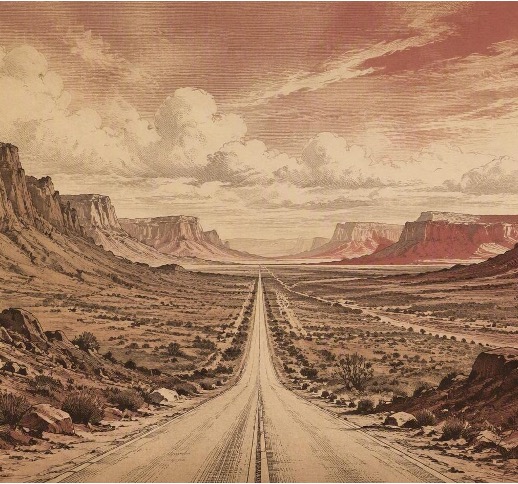
    A highway is to be prepared in the desert, also called the wilderness. The path is through the desolate areas. The Hebrew reference is specifically to the Arabah, which would be the wrong direction for the people to go — so it’s a highway through desolation for God to come to them. 

    Again, comparing to John the Baptizer: the preparation is a call to repentance and faith — believing that “the Kingdom of God is at hand.” A call to hope rouses us out of our complacency and selfishness, into the life of faith and hope.

    The Highway is coming through the desert — a place where there are no resources. There are no natural supports for this hope. It is something God alone can accomplish. But, the glory of the LORD (Israel’s God) shall be revealed and “all people” (a universal hope) will see it. The hope is always that God’s deliverance of the nation of Israel (or Judah, as in this case) will be a witness to all people. This universalistic vision is characteristic of the whole book of Isaiah (however it was written!). God’s ultimate purposes are not confined to Israel alone. God has a purpose to bring hope and salvation to all people.

    How do we know there is hope for Judah in exile and ultimately for all people? Solely because: the mouth of the LORD has spoken.

    Vss. 6-11

     ק֚וֹל אֹמֵ֣ר קְרָ֔א וְאָמַ֖ר מָ֣ה אֶקְרָ֑א כָּל־הַבָּשָׂ֣ר חָצִ֔יר וְכָל־חַסְדּ֖וֹ כְּצִ֥יץ הַשָּׂדֶֽה׃

            A voice says, “Cry out!”
            And I said, “What shall I cry?”
        All people are grass,
     their constancy is like the flower of the field.

    יָבֵ֤שׁ חָצִיר֙ נָ֣בֵֽל צִ֔יץ כִּ֛י ר֥וּחַ יְהוָ֖ה נָ֣שְׁבָה בּ֑וֹ אָכֵ֥ן חָצִ֖יר הָעָֽם׃

    The grass withers, the flower fades,
            when the breath of the LORD blows upon it;
            surely the people are grass.

     יָבֵ֥שׁ חָצִ֖יר נָ֣בֵֽל צִ֑יץ וּדְבַר־אֱלֹהֵ֖ינוּ יָק֥וּם לְעוֹלָֽם׃

        The grass withers, the flower fades;
            but the word of our God will stand forever.

    עַ֣ל הַר־גָּבֹ֤הַ עֲלִי־לָךְ֙ מְבַשֶּׂ֣רֶת צִיּ֔וֹן הָרִ֤ימִי בַכֹּ֨חַ֙ קוֹלֵ֔ךְ מְבַשֶּׂ֖רֶת יְרוּשָׁלִָ֑ם הָרִ֙ימִי֙ אַל־תִּירָ֔אִי אִמְרִי֙ לְעָרֵ֣י יְהוּדָ֔ה הִנֵּ֖ה אֱלֹהֵיכֶֽם׃

      Get you up to a high mountain,
            O Zion, herald of good tidings;
        lift up your voice with strength,
            O Jerusalem, herald of good tidings,
            lift it up, do not fear;
        say to the cities of Judah,
            “Here is your God!”

    הִנֵּ֨ה אֲדֹנָ֤י יְהוִה֙ בְּחָזָ֣ק יָב֔וֹא וּזְרֹע֖וֹ מֹ֣שְׁלָה ל֑וֹ הִנֵּ֤ה שְׂכָרוֹ֙ אִתּ֔וֹ וּפְעֻלָּת֖וֹ לְפָנָֽיו׃

         See, the Lord GOD comes with might,
            and his arm rules for him;
        his reward is with him,
            and his recompense before him.

    כְּרֹעֶה֙ עֶדְר֣וֹ יִרְעֶ֔ה בִּזְרֹעוֹ֙ יְקַבֵּ֣ץ טְלָאִ֔ים וּבְחֵיק֖וֹ יִשָּׂ֑א עָל֖וֹת יְנַהֵֽל׃

      He will feed his flock like a shepherd;
            he will gather the lambs in his arms,
        and carry them in his bosom,
            and gently lead the mother sheep.


    We have here a succession of images: Human flesh is like grass —>Voices on a high mountain proclaiming good tidings —> Israel’s God coming with might and favor —> God caring for the people like a shepherd. The succession of images is a bit jarring. Weakness —> Proclamation —> Might —> Shepherding. But, the point is that while the nation is weak and captive, God is powerful and caring.

    In verse 6 a new voice enters: a voice that calls the hearer to proclaim the frailty of human life. Human hopes disappoint because human life is like grass — it has no permanence. In the New Testament, James speaks of our life as being like a mist. Our life passes. Human hopes are built on a weak foundation.

    In spite of this, the herald of hope needs to stand on a high mountain. The exiled nation’s hope is in God, not in the insubstantial plans of human beings. Human lives will come and go — God’s proclamation will stand.

    The final image is a pastoral image: God caring for the nation as a shepherd would care for a flock of sheep. this is a common Biblical image in the Psalms, it also appears in the prophecies of Ezekiel,  and  in the New Testament Gospels (especially the Gospel of John). 

    FOR KO-FI MEMBERS: There are sermon preparation files for a message on this passage (coupled with Mark 1:1-18) in the shop. I have given the message an Advent theme, appropriate for the second Sunday in Advent. As usual, these are in PPTX and ODP formats. You may download these and use them however you wish. You can find them here: Isaiah 40:1-11 A Highway for Our God.
  • If Only God Would Tear Open the Heavens – Isaiah 64:1,2

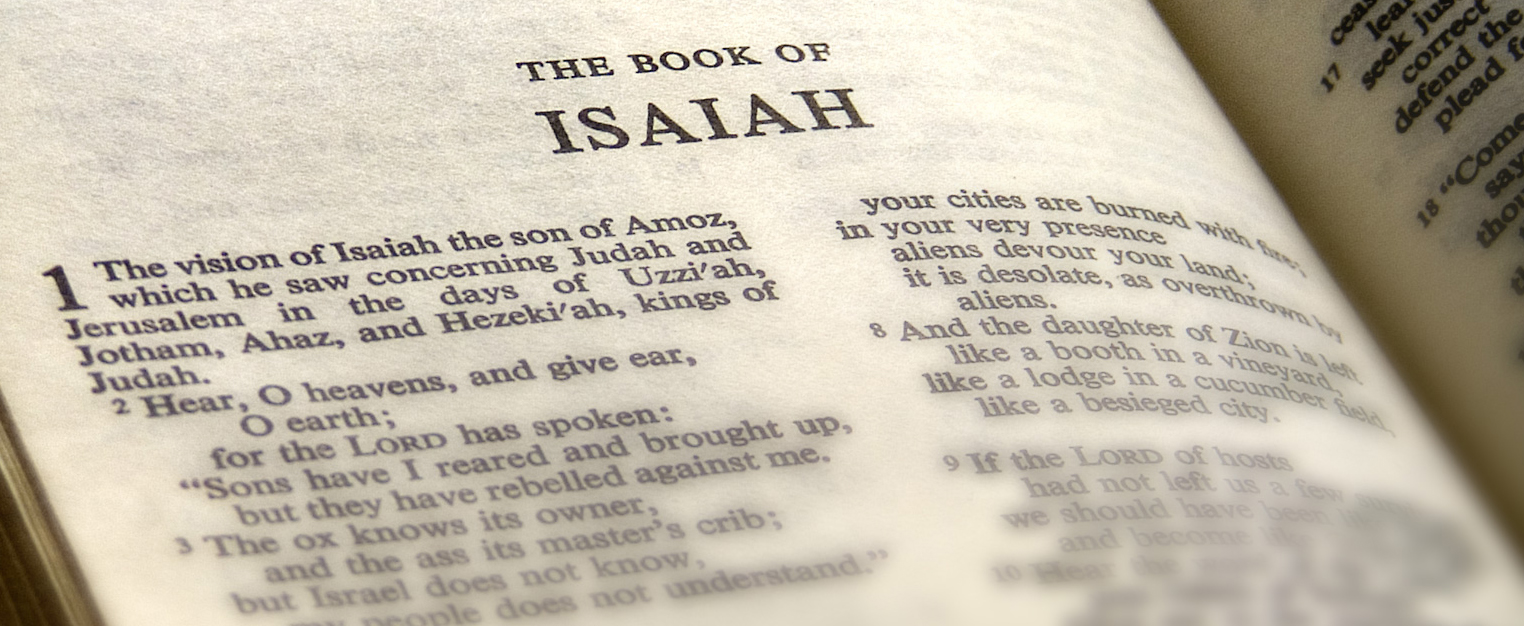
    If Only God Would Tear Open the Heavens – Isaiah 64:1,2

    The writings of the prophets are especially appropriate during the season of Advent. They frame the story of Jesus, they provide us insight into the expectations of the people of Israel at the time Christ was born.

    Chapter 64 of Isaiah is only 12 verses long. If I were using it as the basis of a sermon, I’d read the whole thing rather than just verses 1-9 as the lectionary for Year B suggests.

    The book of Isaiah is now generally considered to have been sort of a group project. Yes, there was a prophet named Isaiah who lived from 740 to 680 B.C. Yes, much of the material in the book of Isaiah was written by him (especially in chapters 1-39). But, it is generally supposed today that large portions of the book were actually written by other people who lived much later. These people sometimes get called Second Isaiah (Deutero-Isaiah, if you want to sound educated) and Third Isaiah (or Trito-Isaiah).

    (more…)
  • The Danger of Forgetting the Poor – Amos 2:6-16

    The Danger of Forgetting the Poor – Amos 2:6-16

    The real heart of Amos’ prophecies was his message to the people of the northern kingdom of Israel (sometimes also called Ephraim, after its dominant tribe). So, when we get to verse 6 of chapter 2, we come to the heart of Amos’ message. Everything has been a preparation for this.

    You can find my comments on the earlier portions of this prophecy here:

    The other nations have been condemned only to underline the message of judgement against Israel. The dramatic, repeated formula appears again:


    כֹּה אָמַ֣ר יְהוָ֔ה עַל־שְׁלֹשָׁה֙ פִּשְׁעֵ֣י יִשְׂרָאֵ֔ל וְעַל־אַרְבָּעָ֖ה לֹ֣א אֲשִׁיבֶ֑נּוּ

    “Thus says the LORD: For three transgressions of Israel, and for four, I will not turn back….”


    What had they done?

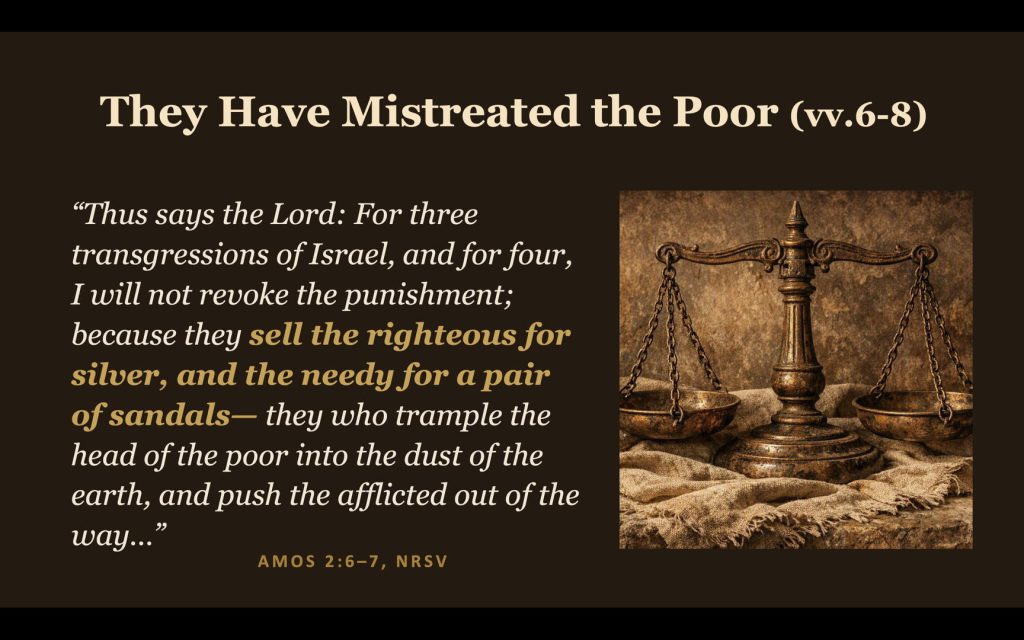
    (1.) They have mistreated the poor (vv.6-8): “…because they sell the righteous for silver, and the needy for a pair of sandals — they who trample the head of the poor into the dust of the earth, and push the afflicted out of the way….”

    It seems to me that the following phrases are intended to speak of the same sorts of crimes: “father and son go in to the same girl, so that my holy name is profaned; they lay themselves down beside every altar on garments taken in pledge; and in the house of their God they drink wine bought with fines they imposed.” I’m taking “father and son go in to the same girl” to mean that father and son (in a household) are sexually abusing the same servant girl. My reason for taking it that way is the context: the crimes listed are crimes of the rich taking advantage of the poor. So, also, their crimes against the poor are illustrated by “garments taken in pledge” and “wine bought with fines they imposed.”

    The clear message of the Bible is that nations are judged by their treatment of the poor. Why have Christians so often lost sight of this?

    I suppose Amos, if he lived today and were speaking to us would be accused of “class warfare.” But, it is a repeated theme in the message of the prophets: the measure of a society is how it treats its weakest, most vulnerable members. There is a very real sense in which God has a bias toward the poor — just as God has a bias toward the needy and the helpless and the outcast.

    We need to consider this when we think about our values and our economics. The prophets of the Old Testament are clear — and we should heed it — the nations will be judged by how they treat the poor and the vulnerable.

    Our politics and our views on economics need to be informed by the prophets. We need to hear what they say about fairness and justice, about inequality and equity. We cannot allow politics — and the prevailing political options of the day — to blind us to the values toward which the Bible points us. It’s not about politics in the usual partisan sense — it is about recognizing God’s values. It’s not a partisan issue, folks. It’s just a Christian issue. “If you close your ear to the cry of the poor, you will cry out and not be heard.” (Proverbs 21:13 NRSV).

    (2.) They silenced the voice of the godly (vv. 11, 12): “But you made the nazirites drink wine, and commanded the prophets, saying, ‘You shall not prophesy.’”

    They did not worship God and they would not hear the voice of God’s servants. They sought to corrupt them. They sought to silence them. And why would that be? The voice of God’s people is an independent voice — not beholden to the powers that be. The prophets speak from a higher authority. Their voices challenge the culture and they challenge the powerful. Every Nazarite who takes and keeps his vows (see Number 6:1-21) speaks to the world about a higher reality. He says there is a reason to forgo some of the pleasures of life: there is a higher purpose to life. There is a God. That’s why the Nazarites’ vow was so intolerable. It points to God.

    The people had shamed and silenced those that God had raised up. “And I raised up some of your children to be prophets and some of your youths to be nazirites. Is it not indeed so, O people of Israel? says the LORD.” (v. 11). And, why was all of this so especially bad? Because they had been favored by God (vv.9, 10).

    Here Amos refers to the events recorded in the books of Moses: the deliverance from Egypt, the wanderings through the wilderness and the establishment of the nation in the land where Amorites had formerly lived. As I said before, Amos is a radical traditionalist: he takes the shared history of the people and applies it to his own day.

    This assumes that the people already know this story. When were the first copies of the material in Genesis, Exodus, Leviticus, Numbers and Deuteronomy written down? We will probably never know conclusively. It is natural to suppose that some editing of these writings occurred during the exile of Judah and then, during it’s first establishment back in Palestine. But, the stories certainly pre-date Amos (thought to be the first of the writing prophets). He assumes the people are quite familiar with the story.

    They are a people favored by God. But, they have become greedy and materialistic. They have silenced the voices of the prophets. And, Amos’ message to them is this: You want to see judgement come to the nations for their sins? Then, be prepared for judgement on yourselves!

    “So, I will press you down in your place, just as a cart presses down when it is full of sheaves. Flight shall perish from the swift, and the strong shall not retain their strength, nor shall the mighty save their lives; those who handle the bow shall not stand, and those who are swift of foot shall not save themselves, nor shall those who ride horses save their lives; and those who are stout of heart among the mighty shall flee away naked in that day, says the LORD.” (Amos 2:13-16 NRSV).

    It was a difficult message to hear. Everything must have seemed fine. The wealthy were prosperous, and seemingly secure. But, the moral foundations of the nation had corroded — under the influence of materialism and greed. Amos doesn’t need to name an enemy nation. One will come. The kingdom’s fall is just a matter of time.

    It is also a message to all of those who have been favored by God but forget the poor.

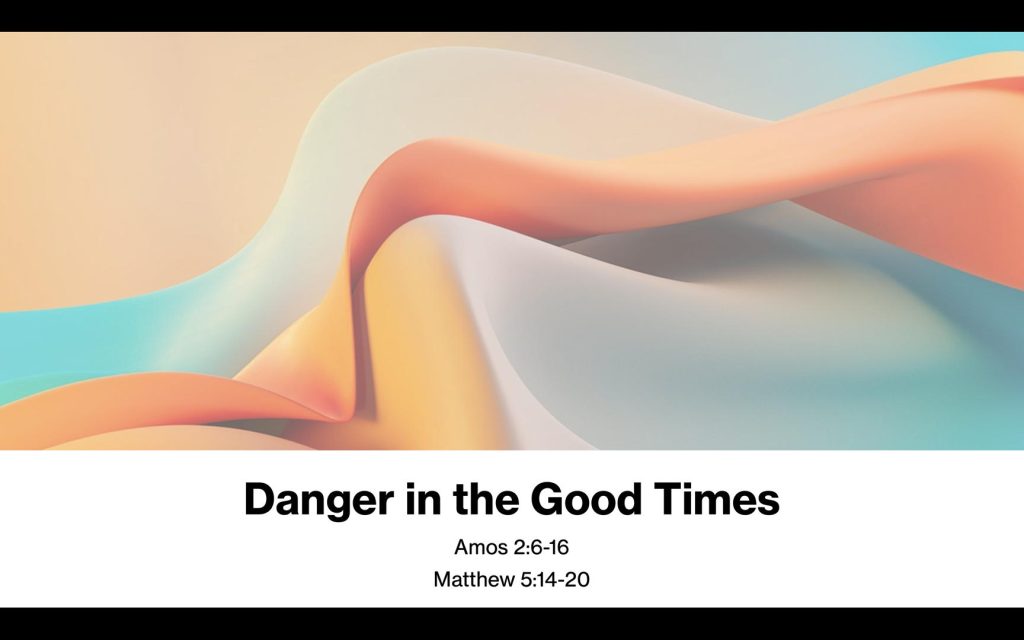
    For monthly supporters on Ko-fi: there are sermon presentation files for a message on this passage (number #5 in the series on the prophet Amos) in the shop for free download. They are in PPTX and ODP formats. They contain speaker’s notes, transitions and animations. You are free to edit, or modify these as you wish. Or: you can just use them as a sermon starter. You may download them here: Danger in the Good Times.

    Some of these may have text too small for congregations to read, so be careful about that. (Sometimes I let some of Microsoft’s design suggestions through.) I put another image below, so you can see what I’m talking about.

  • The Prophecy Comes Home – Amos 2:1-5

    The Prophecy Comes Home – Amos 2:1-5

    Amos continues his prophecies against the nations in this chapter.

    Review: You don’t see what the prophet is doing here until you see that Amos 1-2 is a unit. And, it is carefully structured. Verse 2 pictures the LORD (YHWH) roaring like a lion. Then a series or oracles of judgement follow. Each is for a different nation. They are introduced with this repeated formula:

    עַל־שְׁלֹשָׁה֙ פִּשְׁעֵ֣י

    “For three transgressions of _____________,

    עַל־אַרְבָּעָ֖ה לֹ֣א אֲשִׁיבֶ֑נּוּ

    and for four, I will not turn back….”

    There is a certain rhetorical power in this repeated formula. But, this whole poetic prophecy is going somewhere. It’s building. It is going to end in an extended prophecy of judgement at the end (in our chapter 2). And, the weight of this prophecy of judgement is going to fall on Israel. In Chapter 1 verses 3-15 Amos mentions: Damascus, Gaza, Tyre, Edom, and the Ammonites. There is a pattern here. And, it starts to become clearer in this chapter. The prophecies are coming closer to home.

    With Damascus, Gaza, and Tyre we simply have enemies. But, with Edom, and the Ammonites (and then, the Moabites, mentioned in this chapter) we have near-relatives. The Edomites were believed to be descendants of Israel’s brother Esau. And the Ammonites (like the Moabites) were believed to be descendants of Abraham’s nephew Lot. So, as Amos moves along here, he is getting closer and closer to his real targets: Judah and Israel.

    So, the list continues:

    (6.) Against: Moab“because he burned to lime the bones of the king of Edom.”

    •    Consequences: “So I will send a fire on Moab, and it shall devour the strongholds of Kerioth, and Moab shall die amid uproar, amid shouting and the sound of the trumpet; I will cut off the ruler from its midst, and will kill all its officials with him…”

    What is striking here is that their sin is an act of disrespect of the dead. This incident is not mentioned anywhere else in the Old testament history, so we don’t know anything more about it than what is told here.

    (7.) Against: Judah“because they have rejected the law of the LORD, and have not kept his statutes, but they have been led astray by the same lies after which their ancestors walked.”

    •    Consequences: “So I will send a fire on Judah, and it shall devour the strongholds of Jerusalem.”

    This is where the prophecy takes a dramatic turn. We can still feel the power of this. Yes, the nations have done wrong. Their conduct in war has been cruel and disrespectful. But, this is as nothing before the sins of the Chosen People.

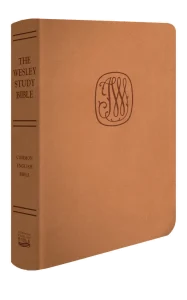
    I found these remarks in The Wesley Study Bible:

    The atrocities recounted here are recognized by all peoples as crimes against humanity, so the nations are accountable to the Creator, the Lord. Since Judah and Israel have a revelation of God’s righteousness…, their guilt is greater than the nations’. Even Jerusalem, the site of God’s throne… is liable to judgment (2: 5).

    It is worth noting at this point: Amos’ prophecies do not come out of nowhere. They are rooted in the particular history of the people of Israel. He assumes they know the story and they know what the law is. it is not a matter of the prophet simply saying: ‘This is true because I say so.’ He is reminding them of their history and the particular revelation of God that has been given to these particular people. The prophetic tradition assumes and builds upon the Mosaic tradition.

    I realize that there is some uncertainty about the writing and editing of the Old Testament books as we have them in their present form. Certainly the exile and restoration of the nation are shaping influences on the books as we have them. but, the prophets remind us that they are much older than that. Before there could be an Amos calling the people back to faithfulness, there first had to be patriarchs and a law giver.

    Like all true prophets Amos is a radical traditionalist. His word grows out of the words already given by others before him — but he radically applies the inner principles of that tradition to the times in which he lived.

    What was Judah’s sin?

    • They rejected the Law of YHWH.
      They were under blood oath to keep this according to Exodus 24:8. It was part of their covenant with God. But, they had no respect for the Law.
    • They have not kept YHWH’s statutes.
      Of course, this phrase is typical Hebrew parallelism (redundancy), but it reminds us that the statutes of God are not only to be respected — they are to be followed.
    • They turned to Idolatry.
      Most commentators think that’s what the phrase “they have been led astray by the same lies after which their ancestors walked” means. They followed after false gods and false prophets.

    When the truth is uncomfortable, the tendency is to turn to those with an easier message. As Jesus said, of those to whom much has been given, much will be required (Luke 12:48). Those who have received a revelation of God’s will have a responsibility to keep it.

    The question for us is: how is the Church of Jesus Christ doing in keeping the teachings of Christ? Are we quick to condemn others when our own house is not in order?

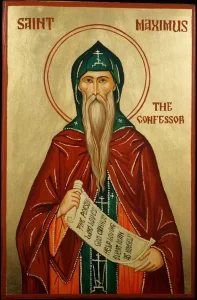
    Maximus the Confessor (ca. 580-662)

    I am reminded of this quote from Maximus the Confessor:

    Whoever is curious about the sins of others, or judges his brother on suspicion, has not yet laid the beginning of repentance and has not taken care to get to known his own sins, which are truly heavier than a lead weight of many pounds, and does not known why a man who loves vanity and seeks after falsehood becomes slow of heart (cf. Psalm 4:3), and therefore, as a man senseless and roaming in darkness, he, leaving his own sins, dreams of those of others, whether true or imagined on suspicion alone.

    How quick we are to condemn! How slow we are to examine ourselves! But, Amos knew himself to be part of a people who were under the judgement of God — for he was himself a member of the tribe of Judah. But, the real crux of this prophecy is what comes next in verses 6-16. Amos primarily prophesied against the northern kingdom of Israel.

    And to that we turn next….  

    For monthly supporters: there are sermon presentation files for a message on this passage (number #4 in the series on the prophet Amos) in the shop for free download here. They are in PPTX and ODP formats. You are free to edit, or modify these as you wish. Or: you can just use them as sermon starters.

  • The Moral Governor of the Nations – Amos 1:3-15

    The Moral Governor of the Nations – Amos 1:3-15

    The time in which the prophet Amos lived was a time of peace and prosperity. But, the prophet could hear God roaring like a lion — in anger.

    Amos the prophet was certain that there was a God to whom the nations must give account. There was a moral judge of the world. No doubt this was a growing realization among the people of Israel. The God they worshiped was not a localized god — not simply their God, but the God of all the nations. YHWH was the God to whom all the nations were accountable. So, in these verses, the prophet begins with this notion: the God of Abraham, Isaac and Jacob will call the nations to accountability.

    (more…)
  • To Whom Does God Speak? – Amos 1:2

    To Whom Does God Speak? – Amos 1:2

    There is a lion roaring, but only the prophet can hear. I said that the opening editorial note in the book of Amos (1:1) already raises an issue for me. The issue is: Who speaks for God? It may not be the person we thought was authorized to do so. Which also brings to mind another question: ‘To Whom (if anyone) does God speak?’” The prophet is the one who sees what others do not. There is an interesting detail in the way Amos 1:1 tells us about this prophecy: Amos spoke what he saw. “The words of Amos… which he saw….” Amos conveyed the sense of what he saw. But, in Amos 1:2 it is more a matter of what he heard:

    (more…)
  • Who Speaks for God? – Amos 1:1

    Who Speaks for God? – Amos 1:1

    The very opening words of the book of the prophet Amos raise a question for us. The question is this: Who Speaks for God?

    The scholars often remind us that the prophets were people who spoke for God. Thus, they were primarily forth-tellers, not primarily fore-tellers. It is a point that needs to be repeated often. The word prophet does not mean “someone who predicts things.” It really means “someone who speaks the Word of God.” The prophets enabled the people to hear what God was saying to them at their own particular place and time in history.

    For some reason, in the popular mind, prophesy has become connected with prediction. When popular preachers speak of what they call “Bible Prophesy” they are most often referring to Bible Apocalyptic: like the highly symbolic material in the book of Daniel or the book of Revelation. But, this is not the heart of prophesy. The heart of prophesy is: “Thus says the LORD.”

    (more…)