Search This Web Site:

Tag: ecstatic

  • The Ecstatic Structure of Human Spirituality

    The Ecstatic Structure of Human Spirituality

    Last week I posted on What is Spirituality?”. This was my attempt to get a handle on what it might mean to call something “spiritual.” While spirituality is certainly a subjective phenomenon, I believe there is a way of talking about it and analyzing it, to some extent. I said:

    Human spirituality is self-transcendence. A spiritual experience is something that lifts us beyond our selves. The true essence of spirituality is to love God with all our heart, soul, strength, and mind; and our neighbor as much as we love our own self. (See Luke 10:27, etc.) There is both a vertical (God-ward) axis and a horizontal (other-ward) axis to this. But, spirituality is always being lifted out of ourselves. Spirituality connects us with God, with the community of faith and with the needs of other people outside the community of faith. These vertical and horizontal axes correspond roughly with the idea of God’s transcendence and God’s immanence. Traditionally, Christian theology has affirmed both God’s transcendence and God’s immanence.

    Here is another way of saying it: there is an ecstatic structure to human spirituality. A spiritual experience is something that lifts us beyond ourselves. It may provide us a sense of connection to a higher reality or it may provide us with a sense of connection with other people. Or, it may do both. But, in any case, it lifts us beyond ourselves — outside ourselves.
    I realize that this assertion (especially the language of “ecstasy”) is very much open to misinterpretation, so I feel the need to say more about it.

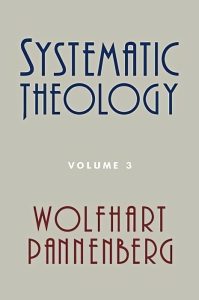
    As with many things, it was Wolfhart Pannenberg that first drew my attention to this:

    In all their forms of manifestation the works of God’s Spirit have an ecstatic character.

    Systematic Theology, Volume 3 page 135.
    If this is so, then we would expect there to be a close connection between spiritual experiences and emotion. A spiritual experience is bound to be an emotional experience. It can hardly help but be!

    People who come to a new-found realization about life — and make new commitments to God — are bound to feel emotional about it. People who feel a new or renewed bond with others are bound to experience this as an emotional experience. So, if we are going to renew the church spiritually it will (of necessity) be an emotional thing. People will be lifted out of themselves.

    Personalities differ, so the nature of these emotional experiences — and the expression of these emotions will differ. Nonetheless, emotion can be expected.

    But, while spiritual experiences are bound (in the nature of the case) to be emotional experiences, the inverse is not true. Emotion, per se, is not spiritual. Emotional experiences are not necessarily spiritual. So, while emotion should be expected, it is not demanded. If we focus our attention on the emotional component of spirituality, we, in fact, get off track.

    Emotion is the side effect of spiritual connection. It is expected but not demanded — nor do we know the form such emotions might take. Individuals (as I said) will respond differently.

    Part of the problem here is within the very word: “ecstatic.” This naturally makes us think of something irrational and out-of-control. But, this is not what is meant at all. In no way would should we set rationality and spirituality at odds with one another. They should, in fact,  support one another. In explaining the statement above, Pannenberg goes on to say:

    Wolfhart Panneenberg (1928–2014)

    But we must rid this statement of any idea of irrational states of intoxication. Ecstasy can mean that creatures, while outside themselves, are supremely with themselves. The reason for they lies in the ecstatic structure of living phenomena. Every living thing lives its life by existing outside itself, namely, in and by the world around it. On the stage of human life, too, the Spirit gives life by lifting individuals above their particularity and finitude; their spontaneity of self-transcendence is only the reverse side of this. The forms of human conduct and experience we call ’spiritual’ in the narrower sense also have ecstatic features for those who experience them, most intensively perhaps in productive spiritual experiences of artistic inspiration, or in insights that come by sudden bursts of illumination, though also in the experience of inner freedom from the stifling bondage that was seemingly invincible. This applies already in a general way to the basic trust with which, in spite of all disillusionment, we constantly open ourselves to what is around us, to the world. And it applies especially again to trusting faith in the God who encounters us in Jesus Christ.

    Systematic Theology, Volume 3 page 135.

    It is natural for human beings to look beyond themselves — in fact, really, we must. So, it is natural for human beings to try to place their own lives in a larger context of meaning. Thus, in this sense, people are naturally religious. Or, it might be better to say: naturally spiritual. We find ourselves asking what life is about, how we ought to act (not just what’s convenient or best for ourselves — but what is right), and where we fit into the scheme of things.

    In this sense, we can see that the struggle is not: atheism vs. religion. Various religions address the questions of meaning and morality in different ways. Atheism is a denial: either: there is no meaning / morality; or: the theistic God (granting for the moment we could arrive at a common idea of God) is not the basis of meaning / morality. But, a denial does not end the question. It is just a subtle way of saying: “You can’t ask that question.” Pannenberg continues:

    This faith [in Jesus Christ] lifts us above our particularity inasmuch as God is powerfully present to us as the light of our final future and assures us at the same time of our own eternal salvation. By the event of this elevation of our own particularity, we as individual believers are also linked with others in the fellowship of believers, a fellowship whose common setting is the extra nos* of faith in the one Lord. The ecstatic integration of this fellowship by the Spirit into the common praise of God can mediate the sense of initial removing of alienation between this and that individual and therefore also the antagonism between individual and society.

    Systematic Theology, Volume 3 pp. 135 & 136.

    Legitimately spiritual experiences support the Christian Gospel’s call for us to love God with all out heart, mind, soul and strength; and our neighbor as ourselves. Spirituality turns us outward toward God and outward toward other people.

    John Wesley says that the evidences of genuine Christian re-birth include “the love of God” and “a sincere, tender, disinterested love for all [human]kind.” Having such a love kindled in our hearts will, of necessity, be an emotional experience.

    But, not all emotional experiences mean more love.  


    *The Latin term extra nos (in the last quote above) means “outside of us.” It is commonly used by Lutheran theologians — and others, of course — in discussing the Theology of the Cross. So, the grace and forgiveness and reconciliation and righteousness a believer receives by faith in Christ is extra nos — a gift received from outside the self.  

  • Inspired Biblical Authors: (3) Ephesians 3:3-4, and Revelation 1:1-4

    Inspired Biblical Authors: (3) Ephesians 3:3-4, and Revelation 1:1-4

    “[ὅτι] κατὰ ἀποκάλυψιν ἐγνωρίσθη μοι τὸ μυστήριον, καθὼς προέγραψα ἐν ὀλίγῳ, πρὸς ὃ δύνασθε ἀναγινώσκοντες νοῆσαι τὴν σύνεσίν μου ἐν τῷ μυστηρίῳ τοῦ Χριστοῦ,” — Ephesians 3:3, 4.

    “and how the mystery was made known to me by revelation, as I wrote above in a few words, a reading of which will enable you to perceive my understanding of the mystery of Christ.” — Ephesians 3:3, 4 NRSV.

    The reference to the “mystery” (μυστήριον) of Christ refers us back to Ephesian 1:9ff: “…he has made known to us the mystery of his will, according to his good pleasure that he set forth in Christ, as a plan for the fullness of time, to gather up all things in him, things in heaven and things on earth.” (NRSV.) I’ve always thought μυστήριον would be better translated “secret” here rather than “mystery.” It signifies something previously unknown which has now been revealed. Translating it as “mystery” suggests it is obscure or hidden, but Ephesians proclaims the μυστήριον has now been revealed. God’s intentions in Christ were unknown before, but now revealed.

    (more…)
  • Inspired Biblical Authors (2): Luke 1:1-4

    Inspired Biblical Authors (2): Luke 1:1-4

    In my last post in this series, I pointed out that 2 Timothy 3:16, 17 may not be as helpful in understanding the idea of the divine inspiration of the Bible as it might seem at first glance. To restate: Because this passage uses the word θεόπνευστος (literally: “God-breathed”) and because 2 Peter 1:21 speaks of prophets who were “borne along by the Holy Spirit,” and “spoke from God” — this would seem to suggest that the inspiration of the Scriptures was some sort of divine dictation, similar to (what people suppose was true of) prophetic inspiration.  But, since the writings these authors are speaking of surely is the Greek translation of the Old Testament (the Septuagint) — interpreters (especially Protestant ones!) have good reason not to draw that conclusion. The Septuagint differs somewhat from the Hebrew Bible, and contains additional books. Anyway, 2 Timothy 3:16, 17 is more focused on the usefulness of  Scripture than on any theory of its inspiration and authority.

    Most interpreters want to avoid the idea of inspiration as a sort of direct dictation from God — even though this idea has some popularity among the Christian public. Thus, for example, Louw & Nida say:

    “In a number of languages it is difficult to find an appropriate term to render ‘inspired.’ In some instances ‘Scripture inspired by God’ is rendered as ‘Scripture, the writer of which was influenced by God’ or ‘… guided by God.’ It is important, however, to avoid an expression which will mean only ‘dictated by God.’” (Greek-English Lexicon of the New Testament Based on Semantic Domains 1989).

    Interpreters want to avoid the notion of divine dictation because it does not seem to accord with what we otherwise know to be the process by which the Scriptures were written. And, it is to this I want to turn now.

    Let’s take a look at those few passages where the Biblical authors talk to us about the process of writing and their intentions in writing.

    Luke 1:1-4
    Ἐπειδήπερ πολλοὶ ἐπεχείρησαν ἀνατάξασθαι διήγησιν περὶ τῶν πεπληροφορημένων ἐν ἡμῖν πραγμάτων, καθὼς παρέδοσαν ἡμῖν οἱ ἀπ᾿ ἀρχῆς αὐτόπται καὶ ὑπηρέται γενόμενοι τοῦ λόγου, ἔδοξεν κἀμοὶ παρηκολουθηκότι ἄνωθεν πᾶσιν ἀκριβῶς καθεξῆς σοι γράψαι, κράτιστε Θεόφιλε, ἵνα ἐπιγνῷς περὶ ὧν κατηχήθης λόγων τὴν ἀσφάλειαν.

    “Since many have undertaken to set down an orderly account of the events that have been fulfilled among us, just as they were handed on to us by those who from the beginning were eyewitnesses and servants of the word, I too decided, after investigating everything carefully from the very first, to write an orderly account for you, most excellent Theophilus, so that you may know the truth concerning the things about which you have been instructed.”


    Luke does not speak of the writing of his Gospel as being a divine dictation — or anything like it.

    He tells us that he set out to write not just an “account” (διήγησιν, as in verse 1), but “an orderly account” (καθεξῆς). Louw & Nida say that the word καθεξῆς means “a sequence of one after another in time, space, or logic” (Greek-English Lexicon of the New Testament Based on Semantic Domains 1989). Time, thought, and organization went into the writing. Not only that, but investigation and research preceded the writing itself: “after investigating everything carefully from the very first….” It is said here that Luke’s account of the life of Jesus from the testimony of those who were “eyewitnesses and servants of the word….”

    So, this is not at all the same as the delivery of an oracle. It was often claimed that the Oracle at Delphi fell into a trance and delivered messages in that state. But, Luke tells us that his writing proceeded from research, thought, and organization.

    The ecstatic structure of human spirituality would also suggest a trance-like type of inspiration. But, in Christianity mind and spirit generally work together. The Holy Spirit imparts wisdom and rationality. While ecstatic in a very basic way, it awakens the mind rather than suppressing it.

    This is a wisdom which was often well-expressed within the 19th Century Holiness movement — but seems to have been forgotten since. Here are the views of Thomas C. Upham (1799–1872):

    The person, who is guided by the Holy Spirit, will be eminently perceptive and rational. The operations of the Holy Spirit, in the agency which he exerts for the purpose of enlightening and guiding men, will not be found to be accidental, or arbitrary, or in any sense irrational operations.

    We repeat, therefore, that one evidence, of being guided by the Holy Spirit, is, that such guidance contributes to the highest rationality. In other words, the person, who is guided by the Holy Spirit, other things being equal, will be the most keenly perceptive, judicious, and rational. Not flighty and precipitate; not prejudiced, one-sided, and dogmatical, but like his great inward teacher, calmly and divinely cognitive. The experience of holy men, particularly of those who have made it a practice to ask the guidance of the Holy Spirit on their studies, agrees with this statement.

    (Found here or here.)

    So, however we are to understand the nature of Biblical inspiration, it is not as a trance-like inspiration that overrides human rationality. It is not divine dictation — and this fact is attested by Luke, one of the most prominent of the New Testament authors. It is the community of faith that recognizes these writings as “inspired” “God-breathed” and its authors as “cared along by the Spirit” — even though it was a rational process to the writers themselves.

    Furthermore, Luke wants us to know that his book rests on the testimony of “eyewitnesses.” It is about events that actually happened. So, again, this is not a collections of oracles given by immediate inspiration — Luke wants to make a credible claim that it is the account of events that happened.

    This insight, in turn points us toward the kind of revelation that the Bible imparts to us. It is not so much a direct vision of God as it is a record of events that reveal the nature, will, and purpose of God. It is historical revelation. The inspired words of Scripture witness to revelatory events.

    Again, taking 2 Timothy 3:16, 17 and 2 Peter 1:21 by themselves would seem to suggest something different. But, in fact, this is an evaluative statement being made about the writings of rational minds illuminated by God’s Spirit.

    But, we can’t let these observations rest on Luke alone. So, next I want to turn to some other passages that tell us about the process by which the Bible was written.