


Last week I posted on “What is Spirituality?”. This was my attempt to get a handle on what it might mean to call something “spiritual.” While spirituality is certainly a subjective phenomenon, I believe there is a way of talking about it and analyzing it, to some extent. I said:
Human spirituality is self-transcendence. A spiritual experience is something that lifts us beyond our selves. The true essence of spirituality is to love God with all our heart, soul, strength, and mind; and our neighbor as much as we love our own self. (See Luke 10:27, etc.) There is both a vertical (God-ward) axis and a horizontal (other-ward) axis to this. But, spirituality is always being lifted out of ourselves. Spirituality connects us with God, with the community of faith and with the needs of other people outside the community of faith. These vertical and horizontal axes correspond roughly with the idea of God’s transcendence and God’s immanence. Traditionally, Christian theology has affirmed both God’s transcendence and God’s immanence.
Here is another way of saying it: there is an ecstatic structure to human spirituality. A spiritual experience is something that lifts us beyond ourselves. It may provide us a sense of connection to a higher reality or it may provide us with a sense of connection with other people. Or, it may do both. But, in any case, it lifts us beyond ourselves — outside ourselves.
I realize that this assertion (especially the language of “ecstasy”) is very much open to misinterpretation, so I feel the need to say more about it.
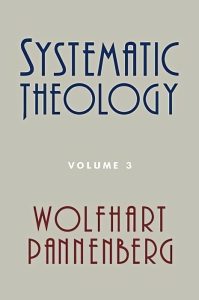
As with many things, it was Wolfhart Pannenberg that first drew my attention to this:
In all their forms of manifestation the works of God’s Spirit have an ecstatic character.
— Systematic Theology, Volume 3 page 135.
If this is so, then we would expect there to be a close connection between spiritual experiences and emotion. A spiritual experience is bound to be an emotional experience. It can hardly help but be!
People who come to a new-found realization about life — and make new commitments to God — are bound to feel emotional about it. People who feel a new or renewed bond with others are bound to experience this as an emotional experience. So, if we are going to renew the church spiritually it will (of necessity) be an emotional thing. People will be lifted out of themselves.
Personalities differ, so the nature of these emotional experiences — and the expression of these emotions will differ. Nonetheless, emotion can be expected.
But, while spiritual experiences are bound (in the nature of the case) to be emotional experiences, the inverse is not true. Emotion, per se, is not spiritual. Emotional experiences are not necessarily spiritual. So, while emotion should be expected, it is not demanded. If we focus our attention on the emotional component of spirituality, we, in fact, get off track.
Emotion is the side effect of spiritual connection. It is expected but not demanded — nor do we know the form such emotions might take. Individuals (as I said) will respond differently.
Part of the problem here is within the very word: “ecstatic.” This naturally makes us think of something irrational and out-of-control. But, this is not what is meant at all. In no way would should we set rationality and spirituality at odds with one another. They should, in fact, support one another. In explaining the statement above, Pannenberg goes on to say:

But we must rid this statement of any idea of irrational states of intoxication. Ecstasy can mean that creatures, while outside themselves, are supremely with themselves. The reason for they lies in the ecstatic structure of living phenomena. Every living thing lives its life by existing outside itself, namely, in and by the world around it. On the stage of human life, too, the Spirit gives life by lifting individuals above their particularity and finitude; their spontaneity of self-transcendence is only the reverse side of this. The forms of human conduct and experience we call ’spiritual’ in the narrower sense also have ecstatic features for those who experience them, most intensively perhaps in productive spiritual experiences of artistic inspiration, or in insights that come by sudden bursts of illumination, though also in the experience of inner freedom from the stifling bondage that was seemingly invincible. This applies already in a general way to the basic trust with which, in spite of all disillusionment, we constantly open ourselves to what is around us, to the world. And it applies especially again to trusting faith in the God who encounters us in Jesus Christ.
— Systematic Theology, Volume 3 page 135.

It is natural for human beings to look beyond themselves — in fact, really, we must. So, it is natural for human beings to try to place their own lives in a larger context of meaning. Thus, in this sense, people are naturally religious. Or, it might be better to say: naturally spiritual. We find ourselves asking what life is about, how we ought to act (not just what’s convenient or best for ourselves — but what is right), and where we fit into the scheme of things.
In this sense, we can see that the struggle is not: atheism vs. religion. Various religions address the questions of meaning and morality in different ways. Atheism is a denial: either: there is no meaning / morality; or: the theistic God (granting for the moment we could arrive at a common idea of God) is not the basis of meaning / morality. But, a denial does not end the question. It is just a subtle way of saying: “You can’t ask that question.” Pannenberg continues:

This faith [in Jesus Christ] lifts us above our particularity inasmuch as God is powerfully present to us as the light of our final future and assures us at the same time of our own eternal salvation. By the event of this elevation of our own particularity, we as individual believers are also linked with others in the fellowship of believers, a fellowship whose common setting is the extra nos* of faith in the one Lord. The ecstatic integration of this fellowship by the Spirit into the common praise of God can mediate the sense of initial removing of alienation between this and that individual and therefore also the antagonism between individual and society.
— Systematic Theology, Volume 3 pp. 135 & 136.
Legitimately spiritual experiences support the Christian Gospel’s call for us to love God with all out heart, mind, soul and strength; and our neighbor as ourselves. Spirituality turns us outward toward God and outward toward other people.
John Wesley says that the evidences of genuine Christian re-birth include “the love of God” and “a sincere, tender, disinterested love for all [human]kind.” Having such a love kindled in our hearts will, of necessity, be an emotional experience.
But, not all emotional experiences mean more love.
*The Latin term extra nos (in the last quote above) means “outside of us.” It is commonly used by Lutheran theologians — and others, of course — in discussing the Theology of the Cross. So, the grace and forgiveness and reconciliation and righteousness a believer receives by faith in Christ is extra nos — a gift received from outside the self.


