Search This Web Site:

Category: Theology

  • Christ & Non-Christians

    Christ & Non-Christians

    Question: What do we do with the fact that there have been billions of people who died before Christ came to be among us on this earth?  Or what about those who never learned about the saving power of Christ? How is it fair that these never had a chance for salvation? What guidance do the Scriptures give us on this issue, and what has the historic Church said about it?

    For many years I have been fascinated by the Wesleyan theological tradition — which happens to be the theological tradition of the United Methodist Church and many other denominations. And in studying this, I discovered that the historic Methodist approach to this issue is a bit different from the ideas commonly heard in the evangelical world today.

    (more…)
  • Christian Faith: Opinion or Life?

    Christian Faith: Opinion or Life?

    What if Christianity is not primarily about what you believe but about what you live? What if its not about your opinions but your choices? What if the Final Judgement before God is about how you lived your life, not what religious opinions you espoused — or even what religious experiences you had? What if our actions are more important than our words? What if what God really wants are people of compassion and patience and peace (in fact, a community of people committed to those ideals)? What if the most important expression of our faith is not a Doctrinal Statement signed but a life well lived, under the Lordship of Christ? What if the real evidence of faith is “love, joy, peace, patience, kindness, generosity, faithfulness,  gentleness, and self-control” (Galatians 5:22, 23)? What if God wants us to be making this world a better place — and we’ve spent our days hiding in our churches? What if the real scandal of Christianity is the huge gap that lies between our Biblical and theological knowledge, and the actual lives that we lead from day to day?

    (more…)
  • Remembrance Inspires Praise – Psalm 135:13-21

    Remembrance Inspires Praise – Psalm 135:13-21

    Psalm 135 is essentially a Psalm of praise. We are called into praise from the very opening “Hallelujah” (praise Yah).

    It is a song of worship and it calls us into an attitude of worship. As Adam Clarke says: “It is an exhortation addressed to the priests and Levites, and to all Israel, to publish the praises of the Lord.”

    The opening verses are an exhortation to worship. Verses 3-5, and 6, 7 extol God’s greatness. Verses 8-12 remind the people of Israel of God’s saving acts in their history: their deliverance from Egypt and the defeat of legendary kings. Then, they are called again to praise.

    Remembrance has a significance for our faith. It is good to recount for ourselves the answered prayers we have experienced — and the unexpected blessing of God on our lives. The Bible is a book of remembrance: recounting the deeds of the Lord God in times past, as a way of illuminating our lives in the present. We know God through what God has done. For Christians, it is the story of Jesus — before any other — that calls forth our praise. And, so it is that in this psalm, the remembrance of God’s deliverance in the past, calls forth praise.

    (more…)
  • Keep the Focus on Jesus!

    Keep the Focus on Jesus!

    When I was just starting out in Christian pastoral ministry (long ago) I was drawn to the writings of Paul for preaching material. It read more like theology to me — it seemed more about ideas and morality — and seemed a better fit for the needs of a three-point sermon outline. I could simply draw from Paul’s writings my point #1, point #2 and so forth. All my points were Biblical (from my perspective at the time) since they each had a verse or a phrase from one of Paul’s letters attached to them.

    What I was missing was that all these assertions Paul makes, all the apparently abstract theology and moralizing, was, in truth, reflection on the life, death and resurrection of Jesus — working out its implications for first century believers. The Epistles must take us back to the Gospels — or else, we are just not getting it. The Gospel message we need to communicate is the story of Jesus.

    (more…)
  • How Does God Think of Us? – Psalm 25:6,7

    How Does God Think of Us? – Psalm 25:6,7

    How would we want other people to think of you? Wouldn’t you want them to think the best? For some people it becomes an obsession: wondering what other people think of them. It is a source of anxiety and shame. Most of the time the truth of the matter is: they don’t spend much time thinking about us at all. And, how much does it matter anyway? Should it?

    How do we want God to think of us? That can be a disturbing line of thought. Many people I know were raised in a hellfire and brimstone religion, where the angry judgement of God was a prominent theme. Human sinfulness & depravity was held up as the basic fact of human nature. We are sinners. And, God is holy. God is offended and angry over our sin. God must condemn us. It is only right.

    This message, resonates with something deep inside us. We know we are not the people we should be. We are often ashamed of ourselves. And, we can’t help but reason: God must know of flaws and errors that we don’t. We are quick to condemn ourselves. Why wouldn’t God condemn us? In fact, it is hard for us to imagine that God would think more highly of us than we think of ourselves. Isn’t it?

    That is why the message of God’s love is always so hard to believe. If we are sometimes tempted to worry about what other people think of us — how much more worrisome the thought of what God might think of us.

    (more…)
  • The Ecstatic Structure of Human Spirituality

    The Ecstatic Structure of Human Spirituality

    Last week I posted on What is Spirituality?”. This was my attempt to get a handle on what it might mean to call something “spiritual.” While spirituality is certainly a subjective phenomenon, I believe there is a way of talking about it and analyzing it, to some extent. I said:

    Human spirituality is self-transcendence. A spiritual experience is something that lifts us beyond our selves. The true essence of spirituality is to love God with all our heart, soul, strength, and mind; and our neighbor as much as we love our own self. (See Luke 10:27, etc.) There is both a vertical (God-ward) axis and a horizontal (other-ward) axis to this. But, spirituality is always being lifted out of ourselves. Spirituality connects us with God, with the community of faith and with the needs of other people outside the community of faith. These vertical and horizontal axes correspond roughly with the idea of God’s transcendence and God’s immanence. Traditionally, Christian theology has affirmed both God’s transcendence and God’s immanence.

    Here is another way of saying it: there is an ecstatic structure to human spirituality. A spiritual experience is something that lifts us beyond ourselves. It may provide us a sense of connection to a higher reality or it may provide us with a sense of connection with other people. Or, it may do both. But, in any case, it lifts us beyond ourselves — outside ourselves.
    I realize that this assertion (especially the language of “ecstasy”) is very much open to misinterpretation, so I feel the need to say more about it.

    As with many things, it was Wolfhart Pannenberg that first drew my attention to this:

    In all their forms of manifestation the works of God’s Spirit have an ecstatic character.

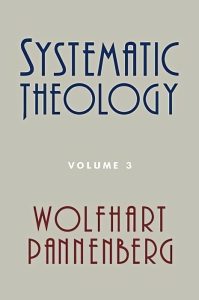
    Systematic Theology, Volume 3 page 135.

    If this is so, then we would expect there to be a close connection between spiritual experiences and emotion. A spiritual experience is bound to be an emotional experience. It can hardly help but be!

    People who come to a new-found realization about life — and make new commitments to God — are bound to feel emotional about it. People who feel a new or renewed bond with others are bound to experience this as an emotional experience. So, if we are going to renew the church spiritually it will (of necessity) be an emotional thing. People will be lifted out of themselves.

    Personalities differ, so the nature of these emotional experiences — and the expression of these emotions will differ. Nonetheless, emotion can be expected.

    But, while spiritual experiences are bound (in the nature of the case) to be emotional experiences, the inverse is not true. Emotion, per se, is not spiritual. Emotional experiences are not necessarily spiritual. So, while emotion should be expected, it is not demanded. If we focus our attention on the emotional component of spirituality, we, in fact, get off track.

    Emotion is the side effect of spiritual connection. It is expected but not demanded — nor do we know the form such emotions might take. Individuals (as I said) will respond differently.

    Part of the problem here is within the very word: “ecstatic.” This naturally makes us think of something irrational and out-of-control. But, this is not what is meant at all. In no way would should we set rationality and spirituality at odds with one another. They should, in fact,  support one another. In explaining the statement above, Pannenberg goes on to say:

    Wolfhart Panneenberg (1928–2014)

    But we must rid this statement of any idea of irrational states of intoxication. Ecstasy can mean that creatures, while outside themselves, are supremely with themselves. The reason for they lies in the ecstatic structure of living phenomena. Every living thing lives its life by existing outside itself, namely, in and by the world around it. On the stage of human life, too, the Spirit gives life by lifting individuals above their particularity and finitude; their spontaneity of self-transcendence is only the reverse side of this. The forms of human conduct and experience we call ’spiritual’ in the narrower sense also have ecstatic features for those who experience them, most intensively perhaps in productive spiritual experiences of artistic inspiration, or in insights that come by sudden bursts of illumination, though also in the experience of inner freedom from the stifling bondage that was seemingly invincible. This applies already in a general way to the basic trust with which, in spite of all disillusionment, we constantly open ourselves to what is around us, to the world. And it applies especially again to trusting faith in the God who encounters us in Jesus Christ.

    Systematic Theology, Volume 3 page 135.

    It is natural for human beings to look beyond themselves — in fact, really, we must. So, it is natural for human beings to try to place their own lives in a larger context of meaning. Thus, in this sense, people are naturally religious. Or, it might be better to say: naturally spiritual. We find ourselves asking what life is about, how we ought to act (not just what’s convenient or best for ourselves — but what is right), and where we fit into the scheme of things.

    In this sense, we can see that the struggle is not: atheism vs. religion. Various religions address the questions of meaning and morality in different ways. Atheism is a denial: either: there is no meaning / morality; or: the theistic God (granting for the moment we could arrive at a common idea of God) is not the basis of meaning / morality. But, a denial does not end the question. It is just a subtle way of saying: “You can’t ask that question.” Pannenberg continues:

    This faith [in Jesus Christ] lifts us above our particularity inasmuch as God is powerfully present to us as the light of our final future and assures us at the same time of our own eternal salvation. By the event of this elevation of our own particularity, we as individual believers are also linked with others in the fellowship of believers, a fellowship whose common setting is the extra nos* of faith in the one Lord. The ecstatic integration of this fellowship by the Spirit into the common praise of God can mediate the sense of initial removing of alienation between this and that individual and therefore also the antagonism between individual and society.

    Systematic Theology, Volume 3 pp. 135 & 136.

    Legitimately spiritual experiences support the Christian Gospel’s call for us to love God with all out heart, mind, soul and strength; and our neighbor as ourselves. Spirituality turns us outward toward God and outward toward other people.

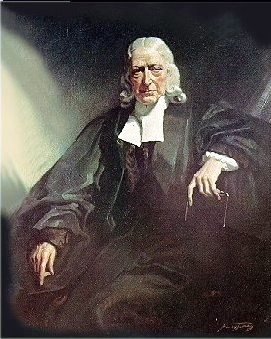
    John Wesley says that the evidences of genuine Christian re-birth include “the love of God” and “a sincere, tender, disinterested love for all [human]kind.” Having such a love kindled in our hearts will, of necessity, be an emotional experience.

    But, not all emotional experiences mean more love.  


    *The Latin term extra nos (in the last quote above) means “outside of us.” It is commonly used by Lutheran theologians — and others, of course — in discussing the Theology of the Cross. So, the grace and forgiveness and reconciliation and righteousness a believer receives by faith in Christ is extra nos — a gift received from outside the self.  

  • What is Spirituality?

    What is Spirituality?

    Oddly enough, Christians often have a difficult time talking meaningfully about spirituality.

    It is as if words fail us at this point. We are at the edge of a mystery. We are talking about the ways of God — and the ways in which humans find connection with God. We are not used to thinking of this as something which is open to analysis and investigation. After all: “The wind blows where it chooses, and you hear the sound of it, but you do not know where it comes from or where it goes. So it is with everyone who is born of the Spirit.” (John 3:8 NRSV).

    (more…)
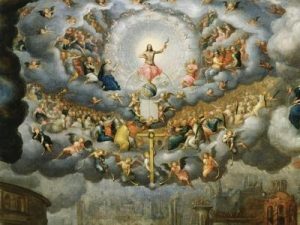
  • Reflections on the Last Judgment

    Reflections on the Last Judgment

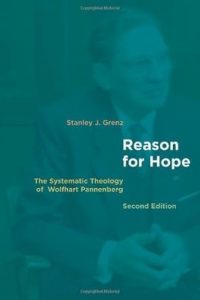
    In the following paragraph from his book Reason for Hope: The Systematic Theology of Wolfhart Pannenberg (1989) Stanley J. Grenz does a good job summarizing some themes in Pannenberg’s view of the final judgment:

    On the basis of [the] function of Jesus’ message [as the criterion of God’s judgment]  and the New Testament emphasis on the all-encompassing love of God (e.g., Matt. 8:11; John 10:16), Pannenberg asserts that correspondence with the will of God as reflected in Jesus’ proclamation — that is, the command to seek first God’s kingdom and the double command to love — rather than an actual encounter with the Christian message, is the basis of final judgment (Matt. 25:41ff.).

    The step in this direction is prepared by a thesis, developed in the Christology and ecclesiology sections, that love for others entails participation in God’s love for the world. This understanding of the criterion for judgment means that persons who live in accordance with Jesus’ message will be included in the divine salvation, whereas nominal Christians may find themselves excluded. To the resultant question, If an encounter with Jesus is not the sole condition for salvation, what is the Christian’s advantage? he replies that Christians have the advantage in that they know what the standard of judgment is. Although he emphasizes the universality of the possibility of salvation in this manner and even moves the concept of eternal condemnation to that of a border situation, Pannenberg is unwilling to embrace universalism.

    This resonates very well with the sense I remember getting from my initial reading of Volume 3 of Pannenberg’s Systematic Theology.

    There is so much here to like. This fits very well with the Wesleyan themes that: (1.) “without holiness no one will see the Lord” and that, in turn, (2.) the essence of this holiness is love to God and love for other people. It sets this theology apart from the common variety of evangelicalism which posits salvation either by creed or by a particular religious experience. Faith in Christ is the doorway into holy living. A faith that makes no difference in a person’s life is a dead faith — or, as Wesley would point out the faith of the devil and the demons! This is not saving faith. Faith brings a person’s life into ever-growing continuity with the will of God revealed in Christ.

    The proclamation of Jesus was

    “The time is fulfilled, and the kingdom of God has come near; repent, and believe in the good news.” (Mark 1:15 NRSV).

    This also was the proclamation entrusted to Jesus’ disciples. It is a message which is moral to the core — it calls for a change in attitude and a change in life. It calls us to align ourselves with God’s purposes — for our lives and for our world. We turn. We leave the past behind. We begin anew. We seek God’s will and God’s Reign — however imperfectly we may understand, and however imperfectly we may see it realized. It is a call to change our ways.

    We do not have the right to turn it into something else. How can it become merely “change your worldview” or “put a check-mark in this box” — when the call is to repent, and to believe and become a part of the redemptive work of God in the world?

    Nevertheless, this understanding of the Last Judgment also calls us to look beyond the church itself — to God’s will and purpose for all the human race. Thus, it resonates well with the New Testament’s inclusive vision.

    “For [God] will repay according to each one’s deeds: to those who by patiently doing good seek for glory and honor and immortality, he will give eternal life; while for those who are self-seeking and who obey not the truth but wickedness, there will be wrath and fury. There will be anguish and distress for everyone who does evil, the Jew first and also the Greek, but glory and honor and peace for everyone who does good, the Jew first and also the Greek. For God shows no partiality. All who have sinned apart from the law will also perish apart from the law, and all who have sinned under the law will be judged by the law. For it is not the hearers of the law who are righteous in God’s sight, but the doers of the law who will be justified. When Gentiles, who do not possess the law, do instinctively what the law requires, these, though not having the law, are a law to themselves. They show that what the law requires is written on their hearts, to which their own conscience also bears witness; and their conflicting thoughts will accuse or perhaps excuse them on the day when, according to my gospel, God, through Jesus Christ, will judge the secret thoughts of all.” (Romans 2:6-16 NRSV)

    The God proclaimed by Jesus is not a parochial God whose concern is only for a small club or group. God’s purposes have to do with all humanity — and God’s Spirit has been sent upon all flesh. We know there is salvation and new life in the name of Jesus. All who know Christ then proclaim this — and what faith in Christ’s name will mean in the conduct of their lives. But, God’s purposes are greater than we know. And, God’s purposes in Christ are expansive. “… in Christ God was reconciling the world to himself….” (2 Corinthians 5:19 NRSV). “Then Peter began to speak to them: ‘I truly understand that God shows no partiality, but in every nation anyone who fears him and does what is right is acceptable to him.’” (Acts 10:34, 35 NRSV.)

    The benefit of the death of Christ is not only extended to such as have the distinct knowledge of his death and sufferings, but even unto those who are inevitably excluded from this knowledge. Even these may be partakers of the benefit of his death, though ignorant of the history, if they suffer his grace to take place in their hearts, so as of wicked men to become holy.

    — John Wesley, “A Letter to a Person Lately Joined with the People Called Quakers”

    So, this is another reason I like the way this is formulated: it expresses an appropriate hope for all people. This is what I keep calling “Hopeful Inclusivism.” It is not necessarily a doctrine of universal salvation, but it is a hopeful doctrine of universal grace.

    And, it reminds us that that religion per se is not that hope. All people are called to hear and heed the message of Christ — and that includes religious people. The name of Christ is no shield from repentance and faith. The name of Christ does not relax the urgency of God’s call to new life, to discipleship and service. Christ is our way into the life God calls us to live. I don’t think there is anything so obnoxious to God as false, unrepentant, religion.

    And, yet, while affirming a universalistic hope, this did not push Pannenberg to complete universalism. It is true that in Christ there is hope for all. It is true that in Christ we know that God is loving and just — and thus, will deal with all people with justice and fairness. But Pannenberg still leaves room for the possibility of eternal damnation as, as Grenz says, “a border situation.”

    In fact that’s one of the things that surprised me when I first read the last part of Pannenberg’s Systematic Theology. As I read along I thought sure we were about to arrive at universalism — maybe on the next page. But, no! Surely, we can hope for the salvation of all. We would wish for it. But, Pannenberg still felt that there are some who will resist God and God’s will and purpose — however expansively defined — even to the very end.

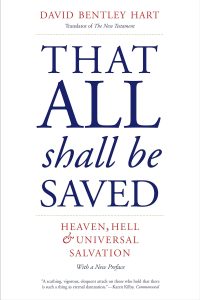
    Certainly David Bentley Hart has made a strong case — formally irrefutable, really — for an ultimate universalism in his book That All Shall Be Saved (2019). I’m not sure what Pannenberg would have said to that. I feel no one should resist the idea. Ultimate salvation is a hope consistent with the character of the God we know through Jesus Christ. Yet, there is much about eternity, the nature of the human consciousness and will, etc. that we do not understand. We do not dare undermine the warnings of proximate moral judgement in the light of ultimate salvation, anyway. The reality of Judgement is clear.

    So, as I say, there is much to like (at least from from my admittedly idiosyncratic point of view) in this perspective on the Last Judgement. But, I do have some disagreements, as well. This (again, quoting from Grenz) seems terribly inadequate to me:

    To the resultant question, If an encounter with Jesus is not the sole condition for salvation, what is the Christian’s advantage? he replies that Christians have the advantage in that they know what the standard of judgement is.

    — Stanley J. Grenz, Reason for Hope: The Systematic Theology of Wolfhart Pannenberg (1989).

    There is salvation and life in the name of Christ. There is the growing experiential knowledge of God’s will — discovered through Scripture and prayer and service and worship and interaction with others. Through faith in Christ these things become Means of Grace to lift us higher into the life of faith. Through them The Holy Spirit works in our inner lives to bring us into conformity to Christ.

    But, God’s will for the human race is that we come to reflect God’s character. “You shall be holy, for I am holy.” And, this is what God is seeking from beginning to end.    

  • Toward a Wesleyan Eschatology

    Toward a Wesleyan Eschatology

    Here’s a question that often comes up: Where do John Wesley and his early followers fit in the familiar end-time schemas of a-millennial, post-millennial and pre-millennial (and it’s pre-trib, mid-trib, post-trib flavors)?

    People looking for information about this find that there is very little available. Here’s the reason: John Wesley doesn’t fit any of these schemas exactly. He has been claimed by both pre-millennialists (Christ returns to establish an age of peace and righteousness on earth) and post-millennialists (an age of peace and righteousness on Earth is established through the advancement of Christian faith, and then Christ returns). And, individual quotations from his works can be lifted out both to support or refute both viewpoints.

    First, let me note Wesley’s approach to the book of Revelation, as a way of introducing and illustrating the problem.

    (more…)
  • Calvinism and John 6:44

    Calvinism and John 6:44

    An email and my response:  

    Hello Mr. Adams,  I read with interest your comments on Calvin's comments on John 3:16 on your web site. I was wondering what your thoughts are on Jesus' words as recorded in John 6:44:  “No one can come to Me unless the Father who sent Me draws him; and I will raise him up at the last day.” (NKJV)  (It is unfortunate that English editions tend to translate the Greek as "draws" rather than the more accurate "compels" — especially since it is also translated more accurately as "dragged" elsewhere.)  Have you considered that perhaps Calvin's "on the other hand" was intended to recognize what the whole of scripture says about this issue?   He just may have been appealing to theology that is rooted in scripture itself.  

      In the first place, I would like to point out that my correspondent is attempting to play one Scripture off another. So, we are playing dueling Scripture passages here. Since the meaning of John 6:44 seems closely tied to its context, using it to fend off the idea of God’s universal love in John 3:16 (which seems to me to have a more general meaning) is a bad idea.

    The context here has to do with the relationship of the Father and the Son. Jesus is claiming that the Jews are rejecting him because (in actuality) they have rejected the Father.

    So, the context of this passage is not a discussion of whether God has chosen to send the mass of humanity to an eternal Hell, while choosing to arbitrarily save (by compulsion: “dragged”) a few. The context concerns why these particular Jews have not been drawn to Jesus as Messiah and Son, while others have. And, Jesus asserts here that it is because they have first rejected the Father and the testimony of the Scriptures.

    Jesus denounces their claim to knowledge of the Father. He asserts that their resistance to the Father & the message of the Scriptures is the reason they have not subsequently been drawn to the Son. The point is made repeatedly. “And the Father who sent me has himself testified on my behalf. You have never heard his voice or seen his form…” (John 5:37). “You search the scriptures because you think that in them you have eternal life; and it is they that testify on my behalf.” (John 5:39). “How can you believe when you accept glory from one another and do not seek the glory that comes from the one who alone is God?” (John 5:44). “If you believed Moses, you would believe me, for he wrote about me. But if you do not believe what he wrote, how will you believe what I say?” (John 5:46, 47). And, earlier in chapter 5 it is stated the other way around: “Anyone who does not honor the Son does not honor the Father who sent him.” (John 5:23).

    Thus the point is that the Jews who are rejecting him are doing so because they have first rejected the Father. But, Jesus asserts that those who acknowledged the Father were “drawn along” into acknowledging the Son.

    My correspondent is right in saying that ἕλκω can mean “dragged.” It is a stronger word than is evident in our translations. In John 21:6 & 11 it is used of the drawing of fish in a net, in John 18:10 of the drawing of a sword, in Acts 16:19 & 21:30 of forcibly dragging the apostles through the streets, and in James 2:6 of being dragged into court.

    But, the context tells us what Jesus means. Those who acknowledge the Father and the testimony of the Scriptures are compelled to also acknowledge the Son. However, the same word (ἕλκω) is also used in John 12:34 where Jesus says : “And I, when I am lifted up from the earth, will draw all people to myself.” (NRSV) If ἕλκω always means “forcibly dragged” then this passage would have to mean that all people (πάντας) are saved — universalism — something Calvinists do not generally affirm. Yet, in Matthew 23:37 (parallel in Luke 13:34) Jesus says: “O Jerusalem, Jerusalem, you who kill the prophets and stone those sent to you, how often I have longed to gather your children together, as a hen gathers her chicks under her wings, but you were not willing.” Thus, it appears, that Christ desires to draw to Himself people who are nonetheless unwilling to come! And, they do not. It is not that God chooses to arbitrarily save a few by divine compulsion. Though the Cross of Christ, He draws all. But, all do not come.

    John Fletcher (1729-1785)

    And, here, I think is where we get to the crux of the matter. The Bible continually assumes human moral responsibility. These Jews were responsible for their rejection of the Father and their rejection of the testimony of the Scriptures. It is everywhere assumed that a choice can be made, and that people can be held responsible for their choices.

    The early Methodists objected to Calvinism on practical grounds, and not simply on theoretical grounds. Fletcher opposed what he called “Solafideism” because it was antinomian (“against the Law of God”): it undermined human moral responsibility through an appeal to God’s unconditional election to salvation.

    Clearly, if you are saved, and you can’t be un-saved, and it is solely God’s choice — then it doesn’t matter what you do. Nothing is riding on it. While classical Calvinists never drew this conclusion, some people were willing to follow the logic of Calvinism to this inevitable conclusion. And, this is one of the things Arminians and Wesleyans and Methodists have always found objectionable: allowing an appeal to grace to undermine our responsibility to respond to God. A call to repentance, for example assumes the ability to respond. And, so forth.

    In many, many ways the Bible continually assumes both the capacity to respond and the responsibility to respond. And, to my correspondent’s question “Have you considered that perhaps Calvin’s ‘on the other hand’ was intended to recognize what the whole of scripture says about this issue?” I have to give a terse: “No.” And, a too-quick harmonization of one Scripture with principles a person thinks they have derived from another is always dangerous. What do we mean by a “theology that is rooted in scripture itself”?

    John Calvin (1509-1564)

    I think Calvin came to his theological views, to a large extent, by way of Augustine. Certainly Augustine also appealed to Scripture for support of his views (though he was no Bible scholar), but his views were also shaped by the controversies of his day and the personal issues they raised for him.

    None of us comes to the Scriptures in a vacuum. The notion that one simply shakes out all of the Bible’s teachings on the floor and arranges them systematically like a jigsaw puzzle is a mistake.

    All of us have been influenced by preachers and Bible teachers. And, I wouldn’t say that is a bad thing — far from it. It’s a good thing. Not everything Augustine or Calvin said is wrong. I agree with much of what they said. They both can be read (critically) to great benefit. But, I also believe some legitimate objections can and should be raised against much of what they said.

    Look folks: not everything Wesley or Fletcher or Clarke or their followers said is right, either. Nevertheless, if we read critically we can benefit from the insights of all.