Search This Web Site:

Category: Wesleyan Theology

  • Yes, I Think Like a Methodist

    Yes, I Think Like a Methodist

    In the early part of his 2012 book How God Became King: The Forgotten Story of the Gospels, N. T. Wright remarks on how the Church has not always allowed itself to hear the full witness of the Gospels to Christ. I won’t attempt to reproduce the argument here: read the book.

    Wright begins by discussing some ways that the Church’s teachings unintentionally got off track. And, as he is discussing how these various theologians of the past attempted to defend orthodoxy in a way that misconstrued some of the Bible’s teachings, he says on page 37 that “the eighteenth century saw great movements of revival, particularly through the Methodist movement led by John and Charles Wesley and George Whitefield.” and, he goes on to say:

    (more…)
  • Wesleyan Perspectives on Faith

    Wesleyan Perspectives on Faith

    I recall attending a Bible Study group where the text being read was James 2:14-26. This led to a very interesting discussion. It is an interesting passage. Here we read things like this:

    • “What good is it, my brothers and sisters, if you say you have faith but do not have works? Can faith save you?” [Implied answer: no.]
    • “So faith by itself, if it has no works, is dead.”
    • “Show me your faith apart from your works, and I by my works will show you my faith.”
    • “Was not our ancestor Abraham justified by works when he offered his son Isaac on the altar?”
    • “You see that a person is justified by works and not by faith alone.”
    • “For just as the body without the spirit is dead, so faith without works is also dead.”

    And I was reminded again of the vital relationship between faith and works in the teachings of the Bible. Genuine faith must eventuate in good works — in obedience to God and service to others. While I am never in a position to judge the genuineness of another person’s faith — nonetheless, faith must always make a difference. And, this is one of the reasons I am thankful for the Wesleyan holiness tradition where my early faith was nurtured. Here are some themes that I especially appreciate in the Wesleyan perspective on faith:

    (more…)
  • What are Methodists, Anyway?

    What are Methodists, Anyway?

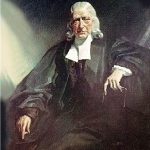
    John Wesley

    Following in the tradition of John Wesley, the Methodist outlook on theology is thoroughly based on scripture, but also enlivened through tradition, experience, and reason.

    Methodists believe that “all Scripture is given by the inspiration of God.” They believe that the written Word of God is the only and sufficient rule both of Christian faith and practice in life.

    Methodists live in a vital faith relationship with God. They turn from sin, and turn to Christ in faith. It is faith in Christ alone that can reconcile us to God.

    (more…)
  • Sanctification as a Central Theme

    Sanctification as a Central Theme

    Since this is actually another blog re-boot,  I thought it would be good to re-iterate my intentions for this web site and this blog — and for my various Internet projects.

    In other words, I’d like to take a few moments to answer the question: why am I doing this? There are days when that is quite a serious question. What has kept me at this so long, and what am I trying to accomplish? I maintain not only this blog, but a growing collection of old holiness writings, a blog drawn from the writings of Daniel Steele and a blog drawn from the writings of Thomas C. Upham. So, that’s really quite a lot.

    (more…)
  • John Wesley Did Not Burn His Old Sermons (And Other Things He Never Said)

    John Wesley Did Not Burn His Old Sermons (And Other Things He Never Said)

    Here is an alleged John Wesley quote frequently encountered on Social Media and on Internet quote sites: Did John Wesley say (as it is claimed, for example here):

    Once in seven years I burn all my sermons; for it is a shame if I cannot write better sermons now than I did seven years ago.

    NO! He quoted someone else (“a good man” he says) who said this — and then said that he disagreed with this idea! Now, look. It’s just not reasonable that he advocated burning his old sermons. He published many of his sermons — even ones he no longer fully endorsed! How could he do that if he burned them? He didn’t burn them, and it’s not reasonable to think he advocated doing so! Here is the relevant entry from John Wesley’s Journal: September 1, 1778:

    (more…)
  • Steele: The Old Testament Witness Against Slavery (1891).

    Steele: The Old Testament Witness Against Slavery (1891).

    I have reproduced this from the Commentary on Leviticus written by Dr. Daniel Steele (1824-1914) in Whedon’s Commentary on the Old Testament. This was originally published in 1891.


    (1.) The verdict of Jehovah against chattelism, and in favor of freedom as the natural inheritance of all men, is found in the sentence of capital punishment inflicted on him who steals and sells a man, or retains him in his hand. Exodus 21:16. This statute lays the axe at the very root of chattel slavery by destroying its very germ, “the wild and guilty phantasy of property in man.” For both stealing and selling assume the fact of a property value. It is to be observed that this law is universal. Stealing a man is a crime. Exodus 21:7, is not a limitation of this universal prohibition to persons of Hebrew blood. The toleration and regulation of the system of servitude in Mosaism are by no means an endorsement of its abstract rightfulness, but rather a concession to the depravity of the times. “Servitude existed before Moses. It was no part of the mission of the Hebrew code to create it. Let it be forever admitted that the laws given of God through Moses cannot be held responsible for its existence. They found it existing, and proceeded, therefore, to modifyit; to soften its more rigid features; to extract its carnivorous teeth; to ordain that the slave had rights which the master and the nation were bound to respect — in short, to tone down the severities of the system from unendurable slavery to very tolerable servitude.” — Cowles.

    (more…)
  • What John Wesley Actually Said About the Bible

    What John Wesley Actually Said About the Bible


    John Wesley saw the Methodist movement as a return to the original life & faith & experience of Christianity. He wanted to return to the faith of the apostles and the early church — to find that same dynamic quality of faith and life that the early Christians had. So, Scripture had a place of central importance in Wesley’s teaching and preaching.


    In Wesley’s view, devotion to the teachings of the Scripture is absolutely essential for the task of keeping and renewing the Christian faith.


    So, in light of this, I’ve gathered together on this page everything substantive that John Wesley said about the Bible. I have not attempted to “tone down” or alter any of his opinions — though I have updated the language in the first quote. My goal here has been completeness.

    Yes, there is some room for argument about what he may have meant by some of these remarks — of course. And, I certainly wouldn’t say the man was in any way infallible. A very valuable line of inquiry would be: how did this actually work out in practice, as he commented on Scripture in his Explanatory Notes.


    But, here is what he actually said.

    (more…)