When I was just starting out in Christian pastoral ministry (long ago) I was drawn to the writings of Paul for preaching material. It read more like theology to me — it seemed more about ideas and morality — and seemed a better fit for the needs of a three-point sermon outline. I could simply draw from Paul’s writings my point #1, point #2 and so forth. All my points were Biblical (from my perspective at the time) since they each had a verse or a phrase from one of Paul’s letters attached to them.
What I was missing was that all these assertions Paul makes, all the apparently abstract theology and moralizing, was, in truth, reflection on the life, death and resurrection of Jesus — working out its implications for first century believers. The Epistles must take us back to the Gospels — or else, we are just not getting it. The Gospel message we need to communicate is the story of Jesus.
Some people think that if they can just find God’s perfect will then their life would be easier — problems, setbacks, and disappointments would be eliminated. Really? I don’t know where such ideas come from — but a moment of thought will dispel them.
The great Bible characters did not have lives that were devoid of difficulties or setbacks or griefs or disappointments. If this did not happen with them, how can we reasonably expect it for ourselves? Jesus grieved over Jerusalem. The apostle Paul knew setbacks and discouragements in his ministry. How can I suppose my life can be free from such things?
The path of the Lord is not easy, it is worthwhile. Those who choose to live as Christ has taught make a positive contribution to life — to their own life and to the lives of others. We move along a difficult path characterized by faith and love and hope. And, by doing so, we bring more faith and hope and love into the world.
How would we want other people to think of you? Wouldn’t you want them to think the best? For some people it becomes an obsession: wondering what other people think of them. It is a source of anxiety and shame. Most of the time the truth of the matter is: they don’t spend much time thinking about us at all. And, how much does it matter anyway? Should it?
How do we want God to think of us? That can be a disturbing line of thought. Many people I know were raised in a hellfire and brimstone religion, where the angry judgement of God was a prominent theme. Human sinfulness & depravity was held up as the basic fact of human nature. We are sinners. And, God is holy. God is offended and angry over our sin. God must condemn us. It is only right.
This message, resonates with something deep inside us. We know we are not the people we should be. We are often ashamed of ourselves. And, we can’t help but reason: God must know of flaws and errors that we don’t. We are quick to condemn ourselves. Why wouldn’t God condemn us? In fact, it is hard for us to imagine that God would think more highly of us than we think of ourselves. Isn’t it?
That is why the message of God’s love is always so hard to believe. If we are sometimes tempted to worry about what other people think of us — how much more worrisome the thought of what God might think of us.
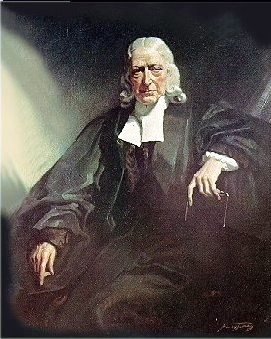
This is one of several items I re-blog every once in a while. And, here’s why. It illustrates one of the huge gulfs between contemporary Methodism and the original Methodism that arose under the leadership of John Wesley. Methodism originally combined: serious Biblical study, impassioned preaching, a personal experience of faith, a serious discipline for spiritual formation and the service of God in the world.
This is from a letter by Adam Clarke to a young man contemplating the ministry. Readers will find this advice a bit (ehem!) challenging. Actually, I think it is good advice myself, though I’d (of course) update the reference works, and have to acknowledge I’m quite a bit more “rusty” on biblical languages (and thus much more reliant on secondary sources) than I wish I were.
First (after the divider rule) I quote Adam Clarke at length. Then (after the next divider) I give some reflection on why I think these remarks are important. (I’ve done some re-formatting. I found this letter in a brief biography of Adam Clarke’s life which had been written by his son-in-law, Samuel Dunn and included in a compendium of Clarke’s writings called Christian Theology.)
“I would lay down two maxims for your conduct:
Never forget any thing you have learned, especially in language, science, history, chronology, antiquities, and theology.
Improve in every thing you have learned, and acquire what you never had, especially whatever may be useful to you in the work of the ministry.
“As to your making or composing sermons, I have no good opinion of it.
“Get a thorough knowledge of your subject: understand your text in all its connection and bearings, and then go into the pulpit depending on the Spirit of God to give you power to explain and illustrate to the people those general and particular views which you have already taken of your subject, and which you conscientiously believe to be correct and according to the word of God. But get nothing by heart to speak there, else even your memory will contribute to keep you in perpetual bondage. No man was ever a successful preacher who did not discuss his subject from his own judgment and experience. The reciters of sermons may be popular; but God scarcely ever employs them to convert sinners, or build up saints in their most holy faith. I do not recommend in this case a blind reliance upon God; taking a text which you do not know how to handle, and depending upon God to give you something to say. He will not be thus employed. Go into the pulpit with your understanding full of light, and your heart full of God; and his Spirit will help you, and then you will find a wonderful assemblage of ideas coming in to your assistance; and you will feel the benefit of the doctrine of association, of which the reciters and memory men can make no use. The finest, the best, and the most impressive thoughts are obtained in the pulpit when the preacher enters it with the preparation mentioned above.
“As to Hebrew, I advise you to learn it with the points. Dr. C. Bayley’s Hebrew Grammar is one of the best; as it has several analyzed portions of the Hebrew text in it, which are a great help to learners. And Parkhurst’s Hebrew Lexicon exceeds all that ever went before it. It gives the ideal meaning of the roots without which who can understand the Hebrew language? Get your verbs and nouns so well fixed in your memory that you shall be able to tell the conjugation, mood, tense, person, and number of every word; and thus you will feel that you tread on sure ground as you proceed. Genesis is the simplest book to begin with; and although the Psalms are highly poetic, and it is not well for a man to begin to acquire a knowledge of any language by beginning with the highest poetic production in it; yet the short hemstitch form of the verses, and the powerful experimental religion which the Psalms inculcate, render them comparatively easy to him who has the life of God in his soul. BYTHNER’S Lyra-Prophetica, in which all the Psalms are analyzed, is a great help; but the roots should be sought for in Parkhurst. Mr. Bell has published a good Greek grammar in English; so have several others. The Greek, like the Hebrew, depends so much on its verbs, their formation and power, that, to make any thing successfully out, you must thoroughly acquaint yourself with them in all their conjugations, &c. It is no mean labor to acquire these; for, in the above, even one regular verb will occur upward of eight hundred different times! Mr. Dawson has published a lexicon for the Greek Testament, in which you may find any word that occurs, with the mood, tense, &c. Any of the later editions of Schrevelius will answer your end. Read carefully Prideaux’ History. The editions prior to 1725 are good for little; none since that period has been much improved, if any thing. “Acquaint yourself with British history. Read few sermons, they will do you little good; those of Mr. Wesley excepted. The Lives of holy men will be profitable to you.
“Live in the divine life; walk in the divine life, Live for the salvation of men.”
— Adam Clarke, “Clarke in the Pulpit and in Prayer.”
Before I go any further, let me add one quick note: it seems likely to me that Clarke emphasizes studies in Hebrew in this passage because it could be assumed that this young man already knew Greek and Latin — education being a bit different in those days than it is now. Nowadays, no such assumption can be made, and the study of ancient Greek should be emphasized first.
But, here’s why I think this is good advice:
(1.) Content must take precedence over form. Preaching has become empty and boring for lack of fresh content, fresh insight arising from the preacher’s immersion in the Scriptures and the life of prayer. The absolute first rule of public speaking (to my mind) is: have something to say. No amount of borrowed illustrations or quickie sermon helps will make up for this deficiency. Training in Homiletics cannot help if there is no deep insight from Scripture and prayer and life.
I agree that not everyone will be an Adam Clarke. And, his advice is quite off-putting in that way. Not all of us (certainly including myself) will achieve the command of ancient languages that Clarke achieved. No, not everyone is going to develop the passion for ancient languages that he had. On the other hand, bear in mind, that this man was one of Wesley’s local preachers! He was not a scholar working in a secluded University. He was engaged in ministry and preaching. And, look what he produced! Reading should be wide. All knowledge — granted it is legitimate knowledge — is relevant to the preacher’s task.
(2.) The absolute second rule of public speaking (to my mind) is: speak with passion and enthusiasm. You have to care. You have to think that what you have to say is important. It needs to show that you do. Preachers can only become preachers through deep, sustained Bible Study and prayer. All other knowledge they can gain is bound to be of benefit.
(3.) My third rule would be this: Live the life of faith. Then, you can talk about it. As Clarke says: ““Live in the divine life; walk in the divine life, Live for the salvation of [others].” But, you can never be a preacher by studying preaching. The preacher must preach from the overflow.
There are times when we may feel we’ve lost our way. The future seems uncertain and the direction we need to take unclear.
But, there are also times when we feel confident that we know the way — that we know the will of God — at least reasonably well. Psalm 25:4,5 suggests that we really don’t know the way unless we seek to know it. It further suggests that the process of seeking God’s will may take me some time and effort.
I have been discussing this Psalm as a Psalm for the “Waiting Times” of our lives (here and here and here). Verses 4 and 5 show us the positive value of these times of waiting: it’s a time to seek God’s will and direction.
Last week I posted on “What is Spirituality?”. This was my attempt to get a handle on what it might mean to call something “spiritual.” While spirituality is certainly a subjective phenomenon, I believe there is a way of talking about it and analyzing it, to some extent. I said:
Human spirituality is self-transcendence. A spiritual experience is something that lifts us beyond our selves. The true essence of spirituality is to love God with all our heart, soul, strength, and mind; and our neighbor as much as we love our own self. (See Luke 10:27, etc.) There is both a vertical (God-ward) axis and a horizontal (other-ward) axis to this. But, spirituality is always being lifted out of ourselves. Spirituality connects us with God, with the community of faith and with the needs of other people outside the community of faith. These vertical and horizontal axes correspond roughly with the idea of God’s transcendence and God’s immanence. Traditionally, Christian theology has affirmed both God’s transcendence and God’s immanence.
Here is another way of saying it: there is an ecstatic structure to human spirituality. A spiritual experience is something that lifts us beyond ourselves. It may provide us a sense of connection to a higher reality or it may provide us with a sense of connection with other people. Or, it may do both. But, in any case, it lifts us beyond ourselves — outside ourselves. I realize that this assertion (especially the language of “ecstasy”) is very much open to misinterpretation, so I feel the need to say more about it.
As with many things, it was Wolfhart Pannenberg that first drew my attention to this:
In all their forms of manifestation the works of God’s Spirit have an ecstatic character.
If this is so, then we would expect there to be a close connection between spiritual experiences and emotion. A spiritual experience is bound to be an emotional experience. It can hardly help but be!
People who come to a new-found realization about life — and make new commitments to God — are bound to feel emotional about it. People who feel a new or renewed bond with others are bound to experience this as an emotional experience. So, if we are going to renew the church spiritually it will (of necessity) be an emotional thing. People will be lifted out of themselves.
Personalities differ, so the nature of these emotional experiences — and the expression of these emotions will differ. Nonetheless, emotion can be expected.
But, while spiritual experiences are bound (in the nature of the case) to be emotional experiences, the inverse is not true. Emotion, per se, is not spiritual. Emotional experiences are not necessarily spiritual. So, while emotion should be expected, it is not demanded. If we focus our attention on the emotional component of spirituality, we, in fact, get off track.
Emotion is the side effect of spiritual connection. It is expected but not demanded — nor do we know the form such emotions might take. Individuals (as I said) will respond differently.
Part of the problem here is within the very word: “ecstatic.” This naturally makes us think of something irrational and out-of-control. But, this is not what is meant at all. In no way would should we set rationality and spirituality at odds with one another. They should, in fact, support one another. In explaining the statement above, Pannenberg goes on to say:
Wolfhart Panneenberg (1928–2014)
But we must rid this statement of any idea of irrational states of intoxication. Ecstasy can mean that creatures, while outside themselves, are supremely with themselves. The reason for they lies in the ecstatic structure of living phenomena. Every living thing lives its life by existing outside itself, namely, in and by the world around it. On the stage of human life, too, the Spirit gives life by lifting individuals above their particularity and finitude; their spontaneity of self-transcendence is only the reverse side of this. The forms of human conduct and experience we call ’spiritual’ in the narrower sense also have ecstatic features for those who experience them, most intensively perhaps in productive spiritual experiences of artistic inspiration, or in insights that come by sudden bursts of illumination, though also in the experience of inner freedom from the stifling bondage that was seemingly invincible. This applies already in a general way to the basic trust with which, in spite of all disillusionment, we constantly open ourselves to what is around us, to the world. And it applies especially again to trusting faith in the God who encounters us in Jesus Christ.
It is natural for human beings to look beyond themselves — in fact, really, we must. So, it is natural for human beings to try to place their own lives in a larger context of meaning. Thus, in this sense, people are naturally religious. Or, it might be better to say: naturally spiritual. We find ourselves asking what life is about, how we ought to act (not just what’s convenient or best for ourselves — but what is right), and where we fit into the scheme of things.
In this sense, we can see that the struggle is not: atheism vs. religion. Various religions address the questions of meaning and morality in different ways. Atheism is a denial: either: there is no meaning / morality; or: the theistic God (granting for the moment we could arrive at a common idea of God) is not the basis of meaning / morality. But, a denial does not end the question. It is just a subtle way of saying: “You can’t ask that question.” Pannenberg continues:
This faith [in Jesus Christ] lifts us above our particularity inasmuch as God is powerfully present to us as the light of our final future and assures us at the same time of our own eternal salvation. By the event of this elevation of our own particularity, we as individual believers are also linked with others in the fellowship of believers, a fellowship whose common setting is the extra nos* of faith in the one Lord. The ecstatic integration of this fellowship by the Spirit into the common praise of God can mediate the sense of initial removing of alienation between this and that individual and therefore also the antagonism between individual and society.
Legitimately spiritual experiences support the Christian Gospel’s call for us to love God with all out heart, mind, soul and strength; and our neighbor as ourselves. Spirituality turns us outward toward God and outward toward other people.
John Wesley says that the evidences of genuine Christian re-birth include “the love of God” and “a sincere, tender, disinterested love for all [human]kind.” Having such a love kindled in our hearts will, of necessity, be an emotional experience.
But, not all emotional experiences mean more love.
*The Latin term extra nos (in the last quote above) means “outside of us.” It is commonly used by Lutheran theologians — and others, of course — in discussing the Theology of the Cross. So, the grace and forgiveness and reconciliation and righteousness a believer receives by faith in Christ is extra nos — a gift received from outside the self.
Oddly enough, Christians often have a difficult time talking meaningfully about spirituality.
It is as if words fail us at this point. We are at the edge of a mystery. We are talking about the ways of God — and the ways in which humans find connection with God. We are not used to thinking of this as something which is open to analysis and investigation. After all: “The wind blows where it chooses, and you hear the sound of it, but you do not know where it comes from or where it goes. So it is with everyone who is born of the Spirit.” (John 3:8 NRSV).
I have commented here and here about the themes I see in Psalm 25, but I haven’t said a word so far about the structure of the Psalm. This hardly seems right. It is a bit like putting the cart before the horse. But, I wanted to give you an idea why I find this Psalm so interesting.
The structure is interesting too. This is one of those alphabetic psalms. The first verse begins with the first letter of the Hebrew alphabet, the next verse with the next letter, and so forth. (Other alphabetic psalms are 9, 10, 34, 37, 111, 112, 119 and 145.) The last verse of Psalm 25 is outside this structure.
I want to make some additional introductory remarks about Psalm 25. I said last time that Psalm 25 is a psalm for the Waiting Time. I haven’t always seen it that way. I first became aware of the prominence of this “waiting” theme in this psalm through Peter Craigie’s commentary. Even without Craigie’s conjectural reading, the theme of “waiting” is still found in the repeated use of the Hebrew term קָוָה (qāwāh, v. to hope in; to hope for, wait for, look for) in verses 3 and 21.
“May integrity and uprightness preserve me, for I wait for you.”
I think it’s worthwhile to take a moment to notice the close relationship between the concepts of “waiting” and “hoping.” This relationship is (I think) not immediately apparent to the modern reader.
On the basis of [the] function of Jesus’ message [as the criterion of God’s judgment] and the New Testament emphasis on the all-encompassing love of God (e.g., Matt. 8:11; John 10:16), Pannenberg asserts that correspondence with the will of God as reflected in Jesus’ proclamation — that is, the command to seek first God’s kingdom and the double command to love — rather than an actual encounter with the Christian message, is the basis of final judgment (Matt. 25:41ff.).
The step in this direction is prepared by a thesis, developed in the Christology and ecclesiology sections, that love for others entails participation in God’s love for the world. This understanding of the criterion for judgment means that persons who live in accordance with Jesus’ message will be included in the divine salvation, whereas nominal Christians may find themselves excluded. To the resultant question, If an encounter with Jesus is not the sole condition for salvation, what is the Christian’s advantage? he replies that Christians have the advantage in that they know what the standard of judgment is. Although he emphasizes the universality of the possibility of salvation in this manner and even moves the concept of eternal condemnation to that of a border situation, Pannenberg is unwilling to embrace universalism.
This resonates very well with the sense I remember getting from my initial reading of Volume 3 of Pannenberg’s Systematic Theology.
There is so much here to like. This fits very well with the Wesleyan themes that: (1.) “without holiness no one will see the Lord” and that, in turn, (2.) the essence of this holiness is love to God and love for other people. It sets this theology apart from the common variety of evangelicalism which posits salvation either by creed or by a particular religious experience. Faith in Christ is the doorway into holy living. A faith that makes no difference in a person’s life is a dead faith — or, as Wesley would point out the faith of the devil and the demons! This is not saving faith. Faith brings a person’s life into ever-growing continuity with the will of God revealed in Christ.
The proclamation of Jesus was
“The time is fulfilled, and the kingdom of God has come near; repent, and believe in the good news.” (Mark 1:15 NRSV).
This also was the proclamation entrusted to Jesus’ disciples. It is a message which is moral to the core — it calls for a change in attitude and a change in life. It calls us to align ourselves with God’s purposes — for our lives and for our world. We turn. We leave the past behind. We begin anew. We seek God’s will and God’s Reign — however imperfectly we may understand, and however imperfectly we may see it realized. It is a call to change our ways.
We do not have the right to turn it into something else. How can it become merely “change your worldview” or “put a check-mark in this box” — when the call is to repent, and to believe and become a part of the redemptive work of God in the world?
Nevertheless, this understanding of the Last Judgment also calls us to look beyond the church itself — to God’s will and purpose for all the human race. Thus, it resonates well with the New Testament’s inclusive vision.
“For [God] will repay according to each one’s deeds: to those who by patiently doing good seek for glory and honor and immortality, he will give eternal life; while for those who are self-seeking and who obey not the truth but wickedness, there will be wrath and fury. There will be anguish and distress for everyone who does evil, the Jew first and also the Greek, but glory and honor and peace for everyone who does good, the Jew first and also the Greek. For God shows no partiality. All who have sinned apart from the law will also perish apart from the law, and all who have sinned under the law will be judged by the law. For it is not the hearers of the law who are righteous in God’s sight, but the doers of the law who will be justified. When Gentiles, who do not possess the law, do instinctively what the law requires, these, though not having the law, are a law to themselves. They show that what the law requires is written on their hearts, to which their own conscience also bears witness; and their conflicting thoughts will accuse or perhaps excuse them on the day when, according to my gospel, God, through Jesus Christ, will judge the secret thoughts of all.” (Romans 2:6-16 NRSV)
The God proclaimed by Jesus is not a parochial God whose concern is only for a small club or group. God’s purposes have to do with all humanity — and God’s Spirit has been sent upon all flesh. We know there is salvation and new life in the name of Jesus. All who know Christ then proclaim this — and what faith in Christ’s name will mean in the conduct of their lives. But, God’s purposes are greater than we know. And, God’s purposes in Christ are expansive. “… in Christ God was reconciling the world to himself….” (2 Corinthians 5:19 NRSV). “Then Peter began to speak to them: ‘I truly understand that God shows no partiality, but in every nation anyone who fears him and does what is right is acceptable to him.’” (Acts 10:34, 35 NRSV.)
The benefit of the death of Christ is not only extended to such as have the distinct knowledge of his death and sufferings, but even unto those who are inevitably excluded from this knowledge. Even these may be partakers of the benefit of his death, though ignorant of the history, if they suffer his grace to take place in their hearts, so as of wicked men to become holy.
— John Wesley, “A Letter to a Person Lately Joined with the People Called Quakers”
So, this is another reason I like the way this is formulated: it expresses an appropriate hope for all people. This is what I keep calling “Hopeful Inclusivism.” It is not necessarily a doctrine of universal salvation, but it is a hopeful doctrine of universal grace.
And, it reminds us that that religion per se is not that hope. All people are called to hear and heed the message of Christ — and that includes religious people. The name of Christ is no shield from repentance and faith. The name of Christ does not relax the urgency of God’s call to new life, to discipleship and service. Christ is our way into the life God calls us to live. I don’t think there is anything so obnoxious to God as false, unrepentant, religion.
And, yet, while affirming a universalistic hope, this did not push Pannenberg to complete universalism. It is true that in Christ there is hope for all. It is true that in Christ we know that God is loving and just — and thus, will deal with all people with justice and fairness. But Pannenberg still leaves room for the possibility of eternal damnation as, as Grenz says, “a border situation.”
In fact that’s one of the things that surprised me when I first read the last part of Pannenberg’s Systematic Theology. As I read along I thought sure we were about to arrive at universalism — maybe on the next page. But, no! Surely, we can hope for the salvation of all. We would wish for it. But, Pannenberg still felt that there are some who will resist God and God’s will and purpose — however expansively defined — even to the very end.
Certainly David Bentley Hart has made a strong case — formally irrefutable, really — for an ultimate universalism in his book That All Shall Be Saved (2019). I’m not sure what Pannenberg would have said to that. I feel no one should resist the idea. Ultimate salvation is a hope consistent with the character of the God we know through Jesus Christ. Yet, there is much about eternity, the nature of the human consciousness and will, etc. that we do not understand. We do not dare undermine the warnings of proximate moral judgement in the light of ultimate salvation, anyway. The reality of Judgement is clear.
So, as I say, there is much to like (at least from from my admittedly idiosyncratic point of view) in this perspective on the Last Judgement. But, I do have some disagreements, as well. This (again, quoting from Grenz) seems terribly inadequate to me:
To the resultant question, If an encounter with Jesus is not the sole condition for salvation, what is the Christian’s advantage? he replies that Christians have the advantage in that they know what the standard of judgement is.
There is salvation and life in the name of Christ. There is the growing experiential knowledge of God’s will — discovered through Scripture and prayer and service and worship and interaction with others. Through faith in Christ these things become Means of Grace to lift us higher into the life of faith. Through them The Holy Spirit works in our inner lives to bring us into conformity to Christ.
But, God’s will for the human race is that we come to reflect God’s character. “You shall be holy, for I am holy.” And, this is what God is seeking from beginning to end.