The writings of the prophets are especially appropriate during the season of Advent. They frame the story of Jesus, they provide us insight into the expectations of the people of Israel at the time Christ was born.
Chapter 64 of Isaiah is only 12 verses long. If I were using it as the basis of a sermon, I’d read the whole thing rather than just verses 1-9 as the lectionary for Year B suggests.
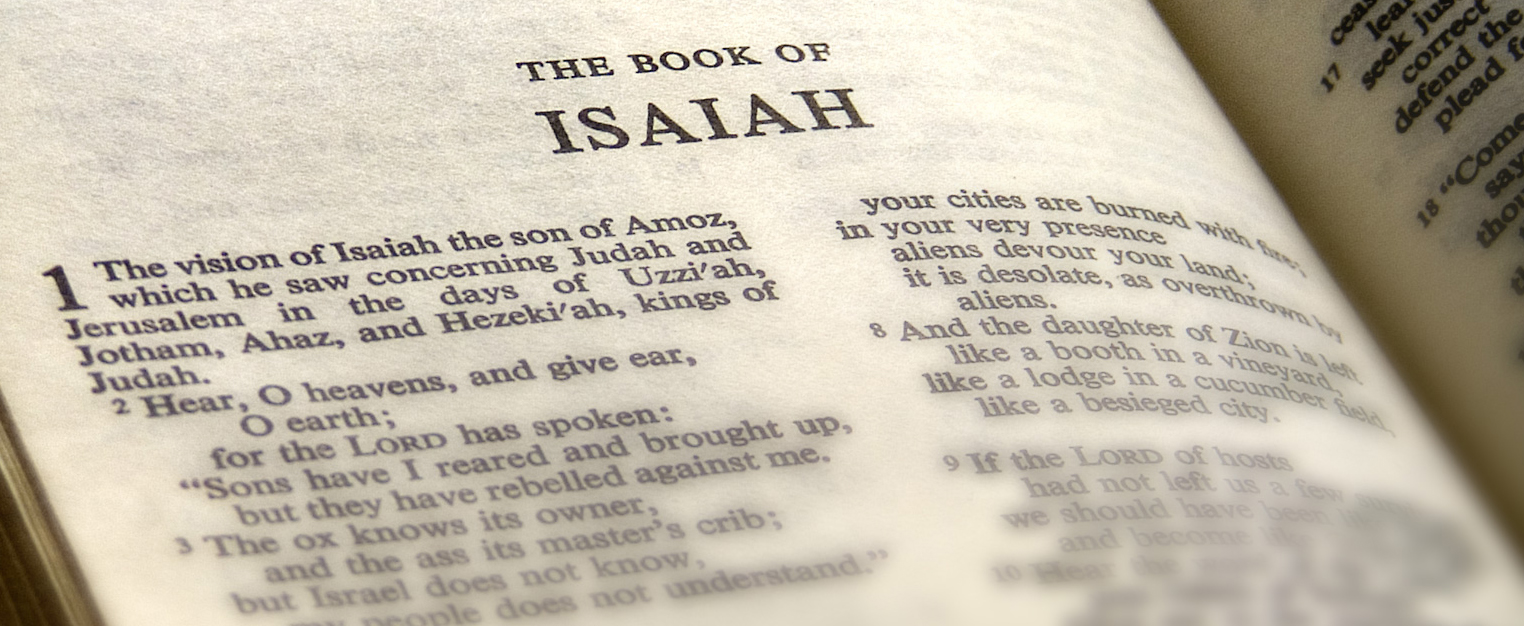
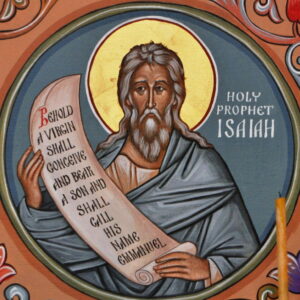
The book of Isaiah is now generally considered to have been sort of a group project. Yes, there was a prophet named Isaiah who lived from 740 to 680 B.C. Yes, much of the material in the book of Isaiah was written by him (especially in chapters 1-39). But, it is generally supposed today that large portions of the book were actually written by other people who lived much later. These people sometimes get called Second Isaiah (Deutero-Isaiah, if you want to sound educated) and Third Isaiah (or Trito-Isaiah).
How did the clergy role manage to develop from preacher to pastor to CEO? And, is this a good thing?
John & Charles Wesley
The early Methodists, clearly saw the preaching role as of foremost importance. John Wesley was a preacher. Yes, he was certainly an organizer as well, but preaching was foremost. He traveled on horseback all over England preaching — often several times a day. Charles Wesley was a preacher. Adam Clarke was a preacher — his commentary on the entire Bible was a side project. All his learning was in the service of preaching.
Yes, the early Methodists believed in the value of “visiting house to house” but it’s clear from the way they talk about it, that they meant teaching from house to house — including the instruction of children. It was an extension of the preaching role.
The early Methodist preachers in this country were evangelists, who rarely stayed in one place for long. The leadership and (what we think of as) pastoral roles had to be fulfilled by lay leaders and class leaders and others in the local church. The task of preaching was too important — the circuit riding preacher needed to be on the move, spreading the Word to new people.
Older churches in the revivalistic model had Sunday morning services, Sunday evening services and midweek prayer services. Then there were revival meetings — often twice a year — and camp meeting in the summer.
But, somewhere along the line, clergy developed from being primarily preachers to being primarily pastors. The emphasis shifted from spreading the Word to tending the flock. Someone more knowledgeable than I might be able to say when this shift began and why.
But, here the focus shifts. It’s not about winning new people, or deepening the commitment and knowledge of the church people — it is taking care of the people you have. The emphasis now turns to meeting the needs of people — the church that does it the best has the best ministry. Attention turns inward.
It’s not that preachers can’t be pastors or pastors can’t be preachers — the issue is which role is uppermost. Which is most important? I remember an otherwise a very fine United Methodist bishop exhorting the clergy at Annual Confereence that people would forgive them their poor sermons if they truly demonstrated that they loved them. (And in my cynicism I mentally replied: “Well, you’ve never been to my house. I guess I can forgive you nothing.”) In this paradigm preaching is not important — the clergy person needs to be an excellent care-giver — and this is what will strengthen the church.
But, then the focus shifted again as people said that clergy needed to be primarily leaders. Now the insights began to come from the business world. Preacher / Pastors, now needed to be trained in organizational management. This, it was claimed, was the great deficiency in Seminary training — no classes in leadership!
Now the uppermost image was the Chief Executive Officer. The clergy person was a leader, teaching others to lead. The clergy had been reading the wrong books. The books that would be most helpful to them would be the same books that were most helpful in the business world.
And the expectations are now piled up on each other — preacher, pastor, CEO. I have read some people who say that this is the most challenging era in which to serve in the ordained ministry — the expectations are too high, and too complex. How likely is it that one person will be gifted and effective in all these areas? And, which is most important?
Maybe now that so many churches are declining and dying — and so few young people are (quite understandably) going into ordained ministry — it is time to take a new look at this. Has the church been killing itself? Yes. Of course, it has — there is simply no one else to blame.
Maybe a newer, more missional, paradigm will arise — maybe it already has. I’d like tho think so. And as the old sinks under the weight of its growing expectations and plummeting effectiveness — maybe some people will remember again how important it is to tell the story of Jesus in compelling and life changing ways. Maybe they will find the ways to do it. Maybe something good will arise out of the rubble of the failing church.
Psalm 135 is essentially a Psalm of praise. We are called into praise from the very opening “Hallelujah” (praise Yah).
It is a song of worship and it calls us into an attitude of worship. As Adam Clarke says: “It is an exhortation addressed to the priests and Levites, and to all Israel, to publish the praises of the Lord.”
The opening verses are an exhortation to worship. Verses 3-5, and 6, 7 extol God’s greatness. Verses 8-12 remind the people of Israel of God’s saving acts in their history: their deliverance from Egypt and the defeat of legendary kings. Then, they are called again to praise.
Remembrance has a significance for our faith. It is good to recount for ourselves the answered prayers we have experienced — and the unexpected blessing of God on our lives. The Bible is a book of remembrance: recounting the deeds of the Lord God in times past, as a way of illuminating our lives in the present. We know God through what God has done. For Christians, it is the story of Jesus — before any other — that calls forth our praise. And, so it is that in this psalm, the remembrance of God’s deliverance in the past, calls forth praise.
I remember the morning (many years ago) when Psalm 135 became memorable to me. I started reading and meditating on this psalm on a stormy morning. There was a thunderstorm raging outside. And, I slowly read these lines: “He it is who makes the clouds rise at the end of the earth; he makes lightnings for the rain and brings out the wind from his storehouses.” (v.7 NRSV) So, now, when I read this again, I am reminded of that morning.
But, for now, let’s begin at the beginning. Notice how it starts.
There is a lion roaring, but only the prophet can hear. I said that the opening editorial note in the book of Amos (1:1) already raises an issue for me. The issue is: Who speaks for God? It may not be the person we thought was authorized to do so. Which also brings to mind another question: ‘To Whom (if anyone) does God speak?’” The prophet is the one who sees what others do not. There is an interesting detail in the way Amos 1:1 tells us about this prophecy: Amos spoke what he saw. “The words of Amos… which he saw….” Amos conveyed the sense of what he saw. But, in Amos 1:2 it is more a matter of what he heard:
There are times when God seems absent. It seems that direction and blessing are gone. We have no sense that our prayers are being heard. We may be in a time of stress and trial, where there seems to be no relief in sight. Service that formerly brought us joy becomes dry and unrewarding. And we ask: Why?
This is one of several items I re-blog every once in a while. And, here’s why. It illustrates one of the huge gulfs between contemporary Methodism and the original Methodism that arose under the leadership of John Wesley. Methodism originally combined: serious Biblical study, impassioned preaching, a personal experience of faith, a serious discipline for spiritual formation and the service of God in the world.
This is from a letter by Adam Clarke to a young man contemplating the ministry. Readers will find this advice a bit (ehem!) challenging. Actually, I think it is good advice myself, though I’d (of course) update the reference works, and have to acknowledge I’m quite a bit more “rusty” on biblical languages (and thus much more reliant on secondary sources) than I wish I were.
First (after the divider rule) I quote Adam Clarke at length. Then (after the next divider) I give some reflection on why I think these remarks are important. (I’ve done some re-formatting. I found this letter in a brief biography of Adam Clarke’s life which had been written by his son-in-law, Samuel Dunn and included in a compendium of Clarke’s writings called Christian Theology.)
“I would lay down two maxims for your conduct:
Never forget any thing you have learned, especially in language, science, history, chronology, antiquities, and theology.
Improve in every thing you have learned, and acquire what you never had, especially whatever may be useful to you in the work of the ministry.
“As to your making or composing sermons, I have no good opinion of it.
“Get a thorough knowledge of your subject: understand your text in all its connection and bearings, and then go into the pulpit depending on the Spirit of God to give you power to explain and illustrate to the people those general and particular views which you have already taken of your subject, and which you conscientiously believe to be correct and according to the word of God. But get nothing by heart to speak there, else even your memory will contribute to keep you in perpetual bondage. No man was ever a successful preacher who did not discuss his subject from his own judgment and experience. The reciters of sermons may be popular; but God scarcely ever employs them to convert sinners, or build up saints in their most holy faith. I do not recommend in this case a blind reliance upon God; taking a text which you do not know how to handle, and depending upon God to give you something to say. He will not be thus employed. Go into the pulpit with your understanding full of light, and your heart full of God; and his Spirit will help you, and then you will find a wonderful assemblage of ideas coming in to your assistance; and you will feel the benefit of the doctrine of association, of which the reciters and memory men can make no use. The finest, the best, and the most impressive thoughts are obtained in the pulpit when the preacher enters it with the preparation mentioned above.
“As to Hebrew, I advise you to learn it with the points. Dr. C. Bayley’s Hebrew Grammar is one of the best; as it has several analyzed portions of the Hebrew text in it, which are a great help to learners. And Parkhurst’s Hebrew Lexicon exceeds all that ever went before it. It gives the ideal meaning of the roots without which who can understand the Hebrew language? Get your verbs and nouns so well fixed in your memory that you shall be able to tell the conjugation, mood, tense, person, and number of every word; and thus you will feel that you tread on sure ground as you proceed. Genesis is the simplest book to begin with; and although the Psalms are highly poetic, and it is not well for a man to begin to acquire a knowledge of any language by beginning with the highest poetic production in it; yet the short hemstitch form of the verses, and the powerful experimental religion which the Psalms inculcate, render them comparatively easy to him who has the life of God in his soul. BYTHNER’S Lyra-Prophetica, in which all the Psalms are analyzed, is a great help; but the roots should be sought for in Parkhurst. Mr. Bell has published a good Greek grammar in English; so have several others. The Greek, like the Hebrew, depends so much on its verbs, their formation and power, that, to make any thing successfully out, you must thoroughly acquaint yourself with them in all their conjugations, &c. It is no mean labor to acquire these; for, in the above, even one regular verb will occur upward of eight hundred different times! Mr. Dawson has published a lexicon for the Greek Testament, in which you may find any word that occurs, with the mood, tense, &c. Any of the later editions of Schrevelius will answer your end. Read carefully Prideaux’ History. The editions prior to 1725 are good for little; none since that period has been much improved, if any thing. “Acquaint yourself with British history. Read few sermons, they will do you little good; those of Mr. Wesley excepted. The Lives of holy men will be profitable to you.
“Live in the divine life; walk in the divine life, Live for the salvation of men.”
— Adam Clarke, “Clarke in the Pulpit and in Prayer.”
Before I go any further, let me add one quick note: it seems likely to me that Clarke emphasizes studies in Hebrew in this passage because it could be assumed that this young man already knew Greek and Latin — education being a bit different in those days than it is now. Nowadays, no such assumption can be made, and the study of ancient Greek should be emphasized first.
But, here’s why I think this is good advice:
(1.) Content must take precedence over form. Preaching has become empty and boring for lack of fresh content, fresh insight arising from the preacher’s immersion in the Scriptures and the life of prayer. The absolute first rule of public speaking (to my mind) is: have something to say. No amount of borrowed illustrations or quickie sermon helps will make up for this deficiency. Training in Homiletics cannot help if there is no deep insight from Scripture and prayer and life.
I agree that not everyone will be an Adam Clarke. And, his advice is quite off-putting in that way. Not all of us (certainly including myself) will achieve the command of ancient languages that Clarke achieved. No, not everyone is going to develop the passion for ancient languages that he had. On the other hand, bear in mind, that this man was one of Wesley’s local preachers! He was not a scholar working in a secluded University. He was engaged in ministry and preaching. And, look what he produced! Reading should be wide. All knowledge — granted it is legitimate knowledge — is relevant to the preacher’s task.
(2.) The absolute second rule of public speaking (to my mind) is: speak with passion and enthusiasm. You have to care. You have to think that what you have to say is important. It needs to show that you do. Preachers can only become preachers through deep, sustained Bible Study and prayer. All other knowledge they can gain is bound to be of benefit.
(3.) My third rule would be this: Live the life of faith. Then, you can talk about it. As Clarke says: ““Live in the divine life; walk in the divine life, Live for the salvation of [others].” But, you can never be a preacher by studying preaching. The preacher must preach from the overflow.
There are times when we may feel we’ve lost our way. The future seems uncertain and the direction we need to take unclear.
But, there are also times when we feel confident that we know the way — that we know the will of God — at least reasonably well. Psalm 25:4,5 suggests that we really don’t know the way unless we seek to know it. It further suggests that the process of seeking God’s will may take me some time and effort.
I have been discussing this Psalm as a Psalm for the “Waiting Times” of our lives (here and here and here). Verses 4 and 5 show us the positive value of these times of waiting: it’s a time to seek God’s will and direction.
Here’s a question that often comes up: Where do John Wesley and his early followers fit in the familiar end-time schemas of a-millennial, post-millennial and pre-millennial (and it’s pre-trib, mid-trib, post-trib flavors)?
People looking for information about this find that there is very little available. Here’s the reason: John Wesley doesn’t fit any of these schemas exactly. He has been claimed by both pre-millennialists (Christ returns to establish an age of peace and righteousness on earth) and post-millennialists (an age of peace and righteousness on Earth is established through the advancement of Christian faith, and then Christ returns). And, individual quotations from his works can be lifted out both to support or refute both viewpoints.
First, let me note Wesley’s approach to the book of Revelation, as a way of introducing and illustrating the problem.
Hello Mr. Adams, I read with interest your comments on Calvin's comments on John 3:16 on your web site. I was wondering what your thoughts are on Jesus' words as recorded in John 6:44: “No one can come to Me unless the Father who sent Me draws him; and I will raise him up at the last day.” (NKJV) (It is unfortunate that English editions tend to translate the Greek as "draws" rather than the more accurate "compels" — especially since it is also translated more accurately as "dragged" elsewhere.) Have you considered that perhaps Calvin's "on the other hand" was intended to recognize what the whole of scripture says about this issue? He just may have been appealing to theology that is rooted in scripture itself.
In the first place, I would like to point out that my correspondent is attempting to play one Scripture off another. So, we are playing dueling Scripture passages here. Since the meaning of John 6:44 seems closely tied to its context, using it to fend off the idea of God’s universal love in John 3:16 (which seems to me to have a more general meaning) is a bad idea.
The context here has to do with the relationship of the Father and the Son. Jesus is claiming that the Jews are rejecting him because (in actuality) they have rejected the Father.
So, the context of this passage is not a discussion of whether God has chosen to send the mass of humanity to an eternal Hell, while choosing to arbitrarily save (by compulsion: “dragged”) a few. The context concerns why these particular Jews have not been drawn to Jesus as Messiah and Son, while others have. And, Jesus asserts here that it is because they have first rejected the Father and the testimony of the Scriptures.
Jesus denounces their claim to knowledge of the Father. He asserts that their resistance to the Father & the message of the Scriptures is the reason they have not subsequently been drawn to the Son. The point is made repeatedly. “And the Father who sent me has himself testified on my behalf. You have never heard his voice or seen his form…” (John 5:37). “You search the scriptures because you think that in them you have eternal life; and it is they that testify on my behalf.” (John 5:39). “How can you believe when you accept glory from one another and do not seek the glory that comes from the one who alone is God?” (John 5:44). “If you believed Moses, you would believe me, for he wrote about me. But if you do not believe what he wrote, how will you believe what I say?” (John 5:46, 47). And, earlier in chapter 5 it is stated the other way around: “Anyone who does not honor the Son does not honor the Father who sent him.” (John 5:23).
Thus the point is that the Jews who are rejecting him are doing so because they have first rejected the Father. But, Jesus asserts that those who acknowledged the Father were “drawn along” into acknowledging the Son.
My correspondent is right in saying that ἕλκω can mean “dragged.” It is a stronger word than is evident in our translations. In John 21:6 & 11 it is used of the drawing of fish in a net, in John 18:10 of the drawing of a sword, in Acts 16:19 & 21:30 of forcibly dragging the apostles through the streets, and in James 2:6 of being dragged into court.
But, the context tells us what Jesus means. Those who acknowledge the Father and the testimony of the Scriptures are compelled to also acknowledge the Son. However, the same word (ἕλκω) is also used in John 12:34 where Jesus says : “And I, when I am lifted up from the earth, will draw all people to myself.” (NRSV) If ἕλκω always means “forcibly dragged” then this passage would have to mean that all people (πάντας) are saved — universalism — something Calvinists do not generally affirm. Yet, in Matthew 23:37 (parallel in Luke 13:34) Jesus says: “O Jerusalem, Jerusalem, you who kill the prophets and stone those sent to you, how often I have longed to gather your children together, as a hen gathers her chicks under her wings, but you were not willing.” Thus, it appears, that Christ desires to draw to Himself people who are nonetheless unwilling to come! And, they do not. It is not that God chooses to arbitrarily save a few by divine compulsion. Though the Cross of Christ, He draws all. But, all do not come.
John Fletcher (1729-1785)
And, here, I think is where we get to the crux of the matter. The Bible continually assumes human moral responsibility. These Jews were responsible for their rejection of the Father and their rejection of the testimony of the Scriptures. It is everywhere assumed that a choice can be made, and that people can be held responsible for their choices.
The early Methodists objected to Calvinism on practical grounds, and not simply on theoretical grounds. Fletcher opposed what he called “Solafideism” because it was antinomian (“against the Law of God”): it undermined human moral responsibility through an appeal to God’s unconditional election to salvation.
Clearly, if you are saved, and you can’t be un-saved, and it is solely God’s choice — then it doesn’t matter what you do. Nothing is riding on it. While classical Calvinists never drew this conclusion, some people were willing to follow the logic of Calvinism to this inevitable conclusion. And, this is one of the things Arminians and Wesleyans and Methodists have always found objectionable: allowing an appeal to grace to undermine our responsibility to respond to God. A call to repentance, for example assumes the ability to respond. And, so forth.
In many, many ways the Bible continually assumes both the capacity to respond and the responsibility to respond. And, to my correspondent’s question “Have you considered that perhaps Calvin’s ‘on the other hand’ was intended to recognize what the whole of scripture says about this issue?” I have to give a terse: “No.” And, a too-quick harmonization of one Scripture with principles a person thinks they have derived from another is always dangerous. What do we mean by a “theology that is rooted in scripture itself”?
John Calvin (1509-1564)
I think Calvin came to his theological views, to a large extent, by way of Augustine. Certainly Augustine also appealed to Scripture for support of his views (though he was no Bible scholar), but his views were also shaped by the controversies of his day and the personal issues they raised for him.
None of us comes to the Scriptures in a vacuum. The notion that one simply shakes out all of the Bible’s teachings on the floor and arranges them systematically like a jigsaw puzzle is a mistake.
All of us have been influenced by preachers and Bible teachers. And, I wouldn’t say that is a bad thing — far from it. It’s a good thing. Not everything Augustine or Calvin said is wrong. I agree with much of what they said. They both can be read (critically) to great benefit. But, I also believe some legitimate objections can and should be raised against much of what they said.
Look folks: not everything Wesley or Fletcher or Clarke or their followers said is right, either. Nevertheless, if we read critically we can benefit from the insights of all.