Search This Web Site:

Category: John Wesley Quotes

  • Matthew 13:1-9, 18-23: The Parable of the Sower

    Matthew 13:1-9, 18-23: The Parable of the Sower

    Comments and Sermon Presentation Files.
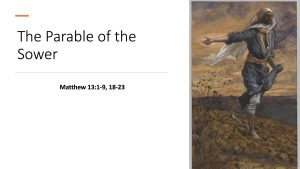
    (Sermon Presentation files for this passage can be found at: Patreon.)

    It is important to see this parable as part of the larger category of Kingdom Parables, that begin in this chapter. In the Gospel of Matthew, there seems to be a clear turning from the clearer Kingdom teaching of (for example) the Sermon on the Mount to the strategy of teaching by parable.
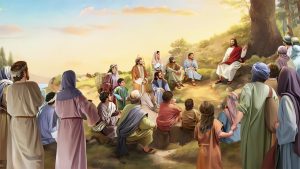
    These parables are not simple homespun illustrations from everyday life. They are very often startling or absurd stories — given to make a point. We have all become so familiar with them that they no longer startle us. So, preachers need to deliberately look for strange or startling elements to re-connect with them. Jesus may be showing us how different the ways of the Kingdom are to the ways of the world. Look for that. Also: look for the main point of the parable. Some of Jesus’ parables in the Gospels (like this one, actually) do have elements of allegory. But, don’t assume its an allegory.

    So, while the Parable of the Sower does not itself mention the idea of the Kingdom of God, it should be viewed as being one of the parables that have this theme. Anyway, the idea of the Kingdom of God is the main theme of Jesus’ teaching in the Gospel of Matthew.

    Some people object to the idea of the “Kingdom of God” because it is archaic, and represents a tyrannical form of government, and because it smacks of patriarchy. This kind of issue is part of the whole task of taking ancient materials from another culture and trying to relate them to our won day and age. It is important to stress the ways God’s Kingdom is different than historic Kingdoms. Jesus took the familiar and gave it new meaning. God is not a tyrant. The Kingdom of God does not more forward by force, but by grace.


    Ἐν τῇ ἡμέρᾳ ἐκείνῃ ἐξελθὼν ὁ Ἰησοῦς τῆς οἰκίας ἐκάθητο παρὰ τὴν θάλασσαν· καὶ συνήχθησαν πρὸς αὐτὸν ὄχλοι πολλοί, ὥστε αὐτὸν εἰς πλοῖον ἐμβάντα καθῆσθαι, καὶ πᾶς ὁ ὄχλος ἐπὶ τὸν αἰγιαλὸν εἱστήκει. — Matthew 13:1, 2 (Nestle-Aland, 28th Revised Edition.)

    “That same day Jesus went out of the house and sat beside the sea. Such great crowds gathered around him that he got into a boat and sat there, while the whole crowd stood on the beach.” — Matthew 13:1,2 NRSV.

    Our attention is drawn here to Jesus’ popularity. It was necessary for him to get into the boat to be able to address the whole crowd. The sea served as his PA system.


    Καὶ ἐλάλησεν αὐτοῖς πολλὰ ἐν παραβολαῖς…. — Matthew 13:3a

    “And he told them many things in parables….” — Matthew 13:3a
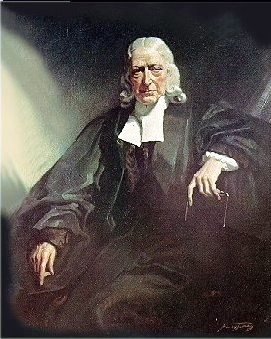
    John Wesley
(1703–1791)
    John Wesley (1703–1791)

    John Wesley remarks:

    This way of speaking, extremely common in the eastern countries, drew and fixed the attention of many, and occasioned the truths delivered to sink the deeper into humble and serious hearers. At the same time, by an awful mixture of justice and mercy, it hid them from the proud and careless. In this chapter our Lord delivers seven parables; directing the four former (as being of general concern) to all the people; the three latter to his disciples.

    These remarks are helpful as long as we remember the surprising or shocking elements Jesus included in his parables. As Wesley says, their goal was both to reveal and to conceal. The word παραβολή suggests a comparison (“a placing one thing by the side of another” — Mounce Greek Dictionary). Preachers who expound this passage can emphasize the contrast between God’s ways and (what are often) human ways.


    …λέγων· ἰδοὺ ἐξῆλθεν ὁ σπείρων τοῦ σπείρειν. καὶ ἐν τῷ σπείρειν αὐτὸν ἃ μὲν ἔπεσεν παρὰ τὴν ὁδόν, καὶ ἐλθόντα τὰ πετεινὰ κατέφαγεν αὐτά. ἄλλα δὲ ἔπεσεν ἐπὶ τὰ πετρώδη ὅπου οὐκ εἶχεν γῆν πολλήν, καὶ εὐθέως ἐξανέτειλεν διὰ τὸ μὴ ἔχειν βάθος γῆς· ἡλίου δὲ ἀνατείλαντος ἐκαυματίσθη καὶ διὰ τὸ μὴ ἔχειν ῥίζαν ἐξηράνθη. ἄλλα δὲ ἔπεσεν ἐπὶ τὰς ἀκάνθας, καὶ ἀνέβησαν αἱ ἄκανθαι καὶ ἔπνιξαν αὐτά. ἄλλα δὲ ἔπεσεν ἐπὶ τὴν γῆν τὴν καλὴν καὶ ἐδίδου καρπόν, ὃ μὲν ἑκατόν, ὃ δὲ ἑξήκοντα, ὃ δὲ τριάκοντα. ὁ ἔχων ὦτα ἀκουέτω. — Matthew 13:3b-9

    “…saying: “Listen! A sower went out to sow. And as he sowed, some seeds fell on the path, and the birds came and ate them up. Other seeds fell on rocky ground, where they did not have much soil, and they sprang up quickly, since they had no depth of soil. But when the sun rose, they were scorched; and since they had no root, they withered away. Other seeds fell among thorns, and the thorns grew up and choked them. Other seeds fell on good soil and brought forth grain, some a hundredfold, some sixty, some thirty. Let anyone with ears listen!’” — Matthew 13:3b-9 NRSV.

    Seed is valuable to a farmer. No farmer would sow seed on the path, on rocky ground, or among thorns. Ideally, the farmer prepares the soil for the sowing of the seed. But, the Kingdom Christ came to inaugurate is different than that. Christ sows the seed of his message everywhere. See: Matthew 4:17: “Repent, for the kingdom of heaven has come near.” His concern and kindnesses were for everyone. See Matthew 11:4–5: “Jesus answered them, ‘Go and tell John what you hear and see: he blind receive their sight, the lame walk, the lepers are cleansed, the deaf hear, the dead are raised, and the poor have good news brought to them.’” Similarly, in the book of Acts, Jesus’ ministry is characterized this way: Acts 10:38 “…God anointed Jesus of Nazareth with the Holy Spirit and with power; how he went about doing good and healing all who were oppressed by the devil, for God was with him.”

    So, this is the way of the Kingdom of God. We don’t first prepare the soil, we spread the seed wherever we go. We don’t wait for people to become worthy before we do them good. We spread good seed in what appears to be unlikely places.

    Alexander Maclaren comments:

    Dr Alexander McLaren (1826-1910).

    It is folly to sow on the hard footpath, or the rocky ground, or among thorns; but Christ and His servants have to do that, in endless hope that these unreceptive hearts may become good soil. One lesson of the parable is, Scatter the seed everywhere, on the most unlikely places.

    The parable alludes to the reality that many of Jesus’ hearers are not receptive. It’s as if he had said: “I think quite a few of you out there are not ready to receive this message I have to give.”

    Nevertheless, there are some who are receptive — and they prove fruitful, beyond expectation. This is how the Kingdom of Christ advances.


    Ὑμεῖς οὖν ἀκούσατε τὴν παραβολὴν τοῦ σπείραντος. παντὸς ἀκούοντος τὸν λόγον τῆς βασιλείας καὶ μὴ συνιέντος ἔρχεται ὁ πονηρὸς καὶ ἁρπάζει τὸ ἐσπαρμένον ἐν τῇ καρδίᾳ αὐτοῦ, οὗτός ἐστιν ὁ παρὰ τὴν ὁδὸν σπαρείς. ὁ δὲ ἐπὶ τὰ πετρώδη σπαρείς, οὗτός ἐστιν ὁ τὸν λόγον ἀκούων καὶ εὐθὺς μετὰ χαρᾶς λαμβάνων αὐτόν, οὐκ ἔχει δὲ ῥίζαν ἐν ἑαυτῷ ἀλλὰ πρόσκαιρός ἐστιν, γενομένης δὲ θλίψεως ἢ διωγμοῦ διὰ τὸν λόγον εὐθὺς σκανδαλίζεται. ὁ δὲ εἰς τὰς ἀκάνθας σπαρείς, οὗτός ἐστιν ὁ τὸν λόγον ἀκούων, καὶ ἡ μέριμνα τοῦ αἰῶνος καὶ ἡ ἀπάτη τοῦ πλούτου συμπνίγει τὸν λόγον καὶ ἄκαρπος γίνεται. ὁ δὲ ἐπὶ τὴν καλὴν γῆν σπαρείς, οὗτός ἐστιν ὁ τὸν λόγον ἀκούων καὶ συνιείς, ὃς δὴ καρποφορεῖ καὶ ποιεῖ ὃ μὲν ἑκατόν, ὃ δὲ ἑξήκοντα, ὃ δὲ τριάκοντα. — Matthew 13:18-23

    “Hear then the parable of the sower. When anyone hears the word of the kingdom and does not understand it, the evil one comes and snatches away what is sown in the heart; this is what was sown on the path. As for what was sown on rocky ground, this is the one who hears the word and immediately receives it with joy; yet such a person has no root, but endures only for a while, and when trouble or persecution arises on account of the word, that person immediately falls away. As for what was sown among thorns, this is the one who hears the word, but the cares of the world and the lure of wealth choke the word, and it yields nothing. But as for what was sown on good soil, this is the one who hears the word and understands it, who indeed bears fruit and yields, in one case a hundredfold, in another sixty, and in another thirty.” — Matthew 13:18-23 NRSV.

    Here is the official explanation, where Jesus explains the allegorical elements of the parable: what is the intended meaning of the various “soils” in the story.

    The message is essentially life-transforming if one hears it and understands it. It is transforming in and of itself. But, various conditions render the word ineffective. Jesus here is implying that the crowd he is addressing is not heeding the message. Maybe they have too much going on in their lives. Maybe they don’t allow the word to take root.

    In and of itself the Kingdom teaching is transformative. Faith allows it to be transformative in the individual’s life. And, when the word takes root, the results are extraordinary: “in one case a hundredfold, in another sixty, and in another thirty.” The older commentaries were very concerned to show how such a harvest was credible — but, that’s because they were still seeing the parables as “simple illustrations from everyday life” — and not the surprising stories about the way of God’s Kingdom.

    So relate this back to both (1.) Jesus’ call to repentance in light of the coming of God’s Kingdom (Matthew 4:17), and (2.) Jesus’ instruction on the way of the Kingdom (Matthew 5-7). The preachers role here is to make the obscurity of the parable plain for the hearer.

    This is a good basis for an evangelistic message: Hear and Heed God’s Message through Christ — it will change your life!

    A FREE GIFT FOR PREACHERS:

    Head over to my (temporary, I think) Patreon page to find a Presentation file for preaching on this passage. It is available in both Power Point (.pptx) or Open Document (.odp) formats. You will find this same article — scroll to the bottom and download the file you wish to use.
  • John Wesley and Spiritual Gifts

    John Wesley and Spiritual Gifts

    What would have been John Wesley’s attitude toward the modern doctrine and practice of Speaking in Tongues? Pentecostal churches teach that this is a necessary initial sign of the Baptism of the Holy Spirit (a empowerment experience subsequent to Christian conversion). Other churches teach that spiritual gifts and miracles were signs that ceased after the age of the apostles. Where would Wesley have stood on these issues?

    The evangelistic ministry and teaching John Wesley provided the impetus for the development of the Methodist & Holiness movements. The holiness movement, in turn, provided the seedbed for the emergence of early Pentecostalism. The original Azusa Street Pentecostalism in turn provided the impetus for the development of the modern Pentecostal & Charismatic movements — which have (somewhat ironically) often lost or even explicitly denied the Holiness / Sanctification themes in Wesley’s teachings.

    That is a rather complicated schema. Is there any evidence of this later unfolding that is already present in Wesley teachings? Wesley distinguished between “extraordinary gifts” and “ordinary” graces of the Spirit. Speaking in Tongues would fall into the category of “extraordinary gifts.” Thus, he did not see the gift of Tongues as part of the abiding significance of the Pentecost event.

    (more…)
  • John Wesley: The Nature of True Faith

    John Wesley: The Nature of True Faith

    John Wesley (1703 –1791)

    Only beware thou do not deceive thy own soul with regard to the nature of this faith. It is not, as some have fondly conceived, a bare assent to the truth of the Bible, of the articles of our creed, or of all that is contained in the Old and New Testament. The devils believe this, as well as I or thou! And yet they are devils still. But it is, over and above this, a sure trust in the mercy of God, through Christ Jesus. It is a confidence in a pardoning God. It is a divine evidence or conviction that ‘God was in Christ, reconciling the world to himself, not imputing to them their’ former ‘trespasses;’ and, in particular, that the Son of God hath loved me, and given himself for me; and that I, even I, am now reconciled to God by the blood of the cross.

    Sermon #7 “The Way of the Kingdom.”

  • A Test of Spiritual Experiences

    A Test of Spiritual Experiences

    John Wesley (1703 –1791)

    Another ground of these, and a thousand mistakes, is, the not considering deeply, that love is the highest gift of God; humble, gentle, patient love; that all visions, revelations, manifestations whatever, are little things compared to love; and that all the gifts above-mentioned are either the same with, or infinitely inferior to, it. It were well you should be thoroughly sensible of this, —’the heaven of heavens is love.’ There is nothing higher in religion; there is, in effect, nothing else; if you look for anything but more love, you are looking wide of the mark, you are getting out of the royal way. And when you are asking others, ‘Have you received this or that blessing?’ if you mean anything but more love, you mean wrong; you are leading them out of the way, and putting them upon a false scent. Settle it then in your heart, that from the moment God has saved you from all sin, you are to aim at nothing more, but more of that love described in the thirteenth of the Corinthians. You can go no higher than this, till you are carried into Abraham’s bosom.

    Farther Thoughts on Christian Perfection.

    I think it is interesting that such a comment is made at the very outset of the Wesleyan movement.

    (more…)
  • On Peace, Love and Perfection – Matthew 5:38-48

    On Peace, Love and Perfection – Matthew 5:38-48

    In this passage Jesus is continuing the series of antithesis statements he began in verse 21. In these he fleshes out what he means by coming not to destroy the law but to fulfill it. He goes beyond the law — not relaxing it, but pushing it further — pushing it toward its spiritual fulfillment. Jesus challenges us to consider more than just outward fulfillment; he pushes us to examine our motivations and inner lives.

    In verses 21-37 the issues were: destructive anger, covetous sexual desire, divorce, and the swearing of oaths. Here the issues are vengefulness, enemies, peace, and universal love for all.  Here the issue is how we treat — and think about — each other. This passage can be seen as a unit because of its closely related themes.

    This is also one of those passages in the New Testament that uses the word τέλειος — often translated “perfect” — which gave rise to the phrase “Christian Perfection”— often used by John Wesley (and his followers) to talk about the spiritual life. The phrase has been misunderstood from the beginning and continues to be misunderstood today, and it’s easy to see why Looking at verse 48 in its context may help to sort out some of the confusion.

    My goal in looking at this passage is much larger than that one issue — it is to understand how Jesus interprets the Old Testament law and applies it to life.

    (more…)
  • Wesleyan Perspectives on Faith

    Wesleyan Perspectives on Faith

    I recall attending a Bible Study group where the text being read was James 2:14-26. This led to a very interesting discussion. It is an interesting passage. Here we read things like this:

    • “What good is it, my brothers and sisters, if you say you have faith but do not have works? Can faith save you?” [Implied answer: no.]
    • “So faith by itself, if it has no works, is dead.”
    • “Show me your faith apart from your works, and I by my works will show you my faith.”
    • “Was not our ancestor Abraham justified by works when he offered his son Isaac on the altar?”
    • “You see that a person is justified by works and not by faith alone.”
    • “For just as the body without the spirit is dead, so faith without works is also dead.”

    And I was reminded again of the vital relationship between faith and works in the teachings of the Bible. Genuine faith must eventuate in good works — in obedience to God and service to others. While I am never in a position to judge the genuineness of another person’s faith — nonetheless, faith must always make a difference. And, this is one of the reasons I am thankful for the Wesleyan holiness tradition where my early faith was nurtured. Here are some themes that I especially appreciate in the Wesleyan perspective on faith:

    (more…)
  • What are Methodists, Anyway?

    What are Methodists, Anyway?

    John Wesley

    Following in the tradition of John Wesley, the Methodist outlook on theology is thoroughly based on scripture, but also enlivened through tradition, experience, and reason.

    Methodists believe that “all Scripture is given by the inspiration of God.” They believe that the written Word of God is the only and sufficient rule both of Christian faith and practice in life.

    Methodists live in a vital faith relationship with God. They turn from sin, and turn to Christ in faith. It is faith in Christ alone that can reconcile us to God.

    (more…)
  • John Wesley Did Not Burn His Old Sermons (And Other Things He Never Said)

    John Wesley Did Not Burn His Old Sermons (And Other Things He Never Said)

    Here is an alleged John Wesley quote frequently encountered on Social Media and on Internet quote sites: Did John Wesley say (as it is claimed, for example here):

    Once in seven years I burn all my sermons; for it is a shame if I cannot write better sermons now than I did seven years ago.

    NO! He quoted someone else (“a good man” he says) who said this — and then said that he disagreed with this idea! Now, look. It’s just not reasonable that he advocated burning his old sermons. He published many of his sermons — even ones he no longer fully endorsed! How could he do that if he burned them? He didn’t burn them, and it’s not reasonable to think he advocated doing so! Here is the relevant entry from John Wesley’s Journal: September 1, 1778:

    (more…)
  • What John Wesley Actually Said About the Bible

    What John Wesley Actually Said About the Bible


    John Wesley saw the Methodist movement as a return to the original life & faith & experience of Christianity. He wanted to return to the faith of the apostles and the early church — to find that same dynamic quality of faith and life that the early Christians had. So, Scripture had a place of central importance in Wesley’s teaching and preaching.


    In Wesley’s view, devotion to the teachings of the Scripture is absolutely essential for the task of keeping and renewing the Christian faith.


    So, in light of this, I’ve gathered together on this page everything substantive that John Wesley said about the Bible. I have not attempted to “tone down” or alter any of his opinions — though I have updated the language in the first quote. My goal here has been completeness.

    Yes, there is some room for argument about what he may have meant by some of these remarks — of course. And, I certainly wouldn’t say the man was in any way infallible. A very valuable line of inquiry would be: how did this actually work out in practice, as he commented on Scripture in his Explanatory Notes.


    But, here is what he actually said.

    (more…)